Showing posts with label words. Show all posts

Wednesday, April 29, 2015

Learning | Apronym and Kibosh

I stumbled across a new word today, while I was trying to look up the origin of another word.  It all started when I used the word "kibosh" in conversation recently. You know, as in, putting the kibosh on something, to stop it. I knew what it meant, from context, but I really had no idea where it came from. So I decided to look it up. 
The Oxford English Dictionary (Cake!)

from Pete Prodoehl's photostream on Flickr.com.


I would love to have this on my birthday cake!

I looked for kibosh in the Oxford English Dictionary. The OED is considered the best source for looking up word origins, but it wasn't much help this time. It declares the origin obscure (meaning nobody knows where the word originated,) but it also mentions that it could be Yiddish or Anglo-Hebraic. 

I decided to check our electronic databases. I didn't know if they would be any help, but I thought there might be an obscure article in a scholarly journal in there somewhere. So I went to Academic Search Premiere, and typed in "kibosh."  

That brought up too many news articles with headlines talking about putting the kibosh on things. 

I narrowed my results to scholarly journals. That cleared things up; instead of 66 articles, I had four. One of those four had a word in the title that I had never heard before: apronym. (The word kibosh was also in the article, as part of an apronym for BLOCKAGE; the article was not about the origin of kibosh.) 


Shoemaker in apron, holding his tools. (Cropped.)
from George Eastman House's photostream on Flickr.com.
No known copyright issues.
Never mind kibosh! 

I had to know more about apronym and its meaning. The word I accidentally found has nothing to do with the names of aprons. 

Apronym is a relatively new word; it is a portmanteau of the words a propos and acronym. (For a discussion of portmanteaus, just click on the above link to my 2013 post about them.)

Here's a link to the article where I found the word apronym. It gives some fun examples of apronyms, in which are acronyms that form a real word, with the words that form the acronym relating to the meaning of the word. For example, Seasonal Affective Disorder has an apronym of SAD. It might help to think of apronyms as plays on words, like puns.

Wednesday, February 25, 2015

Learning | The Right Word: Roget and His Thesaurus

How many of you have enjoyed flipping through Roget's Thesaurus, looking for random groups of synonyms?  I think most of us used it for schoolwork, when looking for the right word to describe something, or trying not to use the same word over and over again in an essay. But I loved picking up the book and learning more about words and their relationships to other words. 

A 2015 Caldecott Honor book presents a similar pleasure, in the form of a children's picture book about the life of Peter Mark Roget.  

The Right Word: Roget and His Thesaurus by Jen Bryant and Melissa Sweet is a visual treasure trove of lists, synonyms, and facts.  It tells the tale of a shy young boy who loved to make lists.  Some of those lists turned into a book that most of us remember from our school days, Roget's Thesaurus

The The Right Word's pages are illustrated with watercolor, collage, and mixed media. They effectively draw the reader in, to explore, discover, and become inspired. This is clearly a book that holds interest, even after repeated readings. I saw one review that compared reading The Right Word to looking through an old curio cabinet!

The publisher of this book, Eerdmans Books for Young Readers, has a delightful video trailer for The Right Word on its YouTube Channel.  


Saturday, February 14, 2015

Learning | The Crossover is a Winner!

Last Monday, I read the latest Newbery Medal Winning book.  It took me only one day to read The Crossover by Kwame Alexander. This book is really different from the typical Newbery book; it is a novel written in verse. 

The book gets its title from a basketball maneuver that involves rapidly switching hands while dribbling the ball. Good players say they can make an opponent break his ankles, when they change sides suddenly.


Josh Defines Crossover in a Poem,
from
The Crossover
by Kwame Alexander


I must admit, when I first started reading the book, I wondered if I would like it. I don't have anything against basketball, but if the whole book was going to be about basketball, I wasn't sure it would hold my interest. 

I was mistaken.

There is a lot of basketball talk in this book, because Josh (the narrator) and his twin brother are basketball stars at their school. Basketball talent must be hereditary in their family; their father is a retired pro basketball player.  But there's so much more to this book. For example: 


  1. Josh is part of a loving family. But they are headed for some rough patches in this book, which test their bonds.  
  2. Josh loves words!  In between the poems that move the story along, there are poems about vocabulary words. 
  3. Basketball is a metaphor in this book.  Especially the term "crossover." Read the book. Think about this. Then tell me what you think about it.
  4. Josh's poems are so varied! Some of them have fun visual effects; some sound like lyrics from a song. Others are more like narratives.  I found myself wondering what I would find, whenever I turned a new page.
  5. Remember what I said about not being sure the book would hold my interest? I got so absorbed in this book, I didn't want it to end.

Middle school and high school aged readers will especially enjoy The Crossover, but I would recommend it to anybody from 6th grade and up.


Saturday, January 10, 2015

Learning | Excoriate

A recent online headline caught the attention of a few of us at the library. It referred to a professional baseball player being "excoriated" for training for a position he no longer plays.  Never mind the controversy about the player's motives for training; it just seemed like an unnecessarily big word for a sports story headline.
Excoriate. From Richard King's photostream on Flickr.com.
Some rights reserved

Excoriate comes from the Latin word excoriatus,  which in turn is derived from the prefix ex- (meaning out or from,) and the Latin word corium (meaning skin or hide.) Both excoriatus and excoriate mean to flay, or strip off the skin or hide. In the eighteenth century, the word started to be used figuratively, meaning to censure or denounce. 


So why didn't the news agency use a shorter word like censure or denounce? I don't  have a good answer for that. Journalists used to try to write news stories that could be read at a sixth grade level.  Perhaps that reporter and editor did not know about that practice, or didn't care.


A search for excoriate in our Shiny New catalog found no results. Instead, I'll leave you with a list of books about that controversial baseball player.

Wednesday, December 17, 2014

Learning | Gutenberg

I just finished an intriguing historical fiction book.  Gutenberg's Apprentice: a Novel is author Alix Christie's first book. I have always been fascinated by medieval illuminated manuscripts, which were traditionally created by hand, by scribes.  I've been equally fascinated by the printing process; if you've ever played with rubber stamps, I'm sure you have noticed how hard it is to make consistent impressions. I've always wondered what processes allow such clarity and uniformity.

Luckily for me, Christie's book explores both worlds. The main character is Peter Schoeffer, a young scribe who has mastered the art of making those illuminated manuscripts. He takes great pride in his work. 

At the beginning of the book, he is suddenly called away from his duties by his stepfather, Johann Fust. Fust is a middle-class trader, who has invested heavily in a secret project of Johann Gutenberg's.  Peter is given to Gutenberg as an apprentice. To say Peter is resistant to the idea is an understatement.  He thinks the early samples of the printed words are very ugly, and feels his very way of life threatened by the possibility of the new technology.

If you look at the photo right below this paragraph, you will see fine examples of the writing and embellishment that can be made with human handiwork. Compare it to the images of the collage further down the page, showing pieces of the Gutenberg Bible. You can see how a scribe like Peter might react strongly to such an oddly regular arrangement of letters on a page.  

Missal of Eberhard von Greiffenklau, Nativity, Walters Manuscript W.174, fol. 17v, from Walters Art Museum Illuminated Manuscripts' photostream on Flickr.com. Some rights reserved.


Gutenberg Bible collage: Left, Miami University's Gutenberg leaf (Recto) from the Gutenberg Bible. It contains Sirach (Ecclesiasticus) 42:14-43:25. From Miami University Library's photostream on Flickr.com. Top Right, Gutenberg Bible - detail from the Old Testament; Bottom Right, detail from the New Testament, The Gutenberg Bible, both digitized by the HUMI Project, Keio University, July 2005; © National Library of Scotland; from National Library of Scotland's photostream on Flickr.com. All images in the collage were taken from The Commons area of Flickr.com, with no known copyright restrictions.


There are many ups and downs to the story of the production of the Gutenberg Bible.  Political and economic conditions forced the crew to work secretly for years, experimenting with various materials and techniques before developing a successful, reliable process.  Alix Christie is a printer herself, so she is able to describe the process in detail.  In some respects, this book reminds me of Homer Hickham's biography, Rocket Boys. In fact, if you enjoyed Rocket Boys, I think you will enjoy Gutenberg's Apprentice.


Wednesday, November 5, 2014

Learning | Happenstance and Q

Happenstance is only about 120 years old or so, which is not terribly old, as English words go.  I don't hear it used very often, but I've always liked the word. 

Happenstance is a portmanteau of the words happen and circumstance.

Recently, I was searching for pictures on Flickr.com, using the search term words. Happenstance brought me to this photograph of a page from a Finnish dictionary, showing all of the words beginning with the letter Q.


All the words beginning with Q in the Finnish dictionary, from hugovk's photostream on Flickr.com. Some rights reserved.


I love this picture, because I learned a few things from it:  


  • I'm not familiar with the Finnish language at all, so I was intrigued to see that so few words begin with the letter Q. Q is not a very common letter in English, but we have many more Q words than the Finnish.
  • I nearly knew what all five of those Finnish Q words meant! Three of them were place names, that are spelled the same way as they are in English.  
  • I knew Quisling meant traitor who collaborates with an enemy force occupying their own country, from studying history during the World War II era. 
  • I had an idea what QWERTY-näppäimistö meant, because the letters QWERTY are the first five letters on most computer keyboards.  In fact, we usually call that type of keyboard a QWERTY keyboard.  So I went to Google Translate, and pasted in the word QWERTY-näppäimistö. Just as I suspected, it means qwerty keyboard. If you would like to hear how to pronounce the word, just copy and paste it into the Google Translate window.
  • Looking at this picture made me think about the Finnish language. I'm quite unfamiliar with the language. I never see people asking for, or checking out books about, the Finnish Language.  So I went to our shiny new library catalog and found a few. There are two different Finnish-English,English-Finnish dictionaries at Cesar Chavez Central Library. Chavez also has a Finnish Reader, in the government documents section of the Storage Area downstairs. It's from 1968!

Wednesday, October 8, 2014

Learning | Ombudsman

Ombudsman


Recently, a co-worker stumbled across the word ombudsman while she was helping the customer look up some federal government job titles.  We talked about what an odd word it is.  

I remember an Ombudsman's Office at my undergraduate alma mater; it helped people get through red tape with things like housing, financial aid, legal matters, and so forth. But I never really looked up the word, and wondered where it came from.

I did look the word up in the dictionary; you will find the definition and etymology at the end of this post.  I'm hiding it at the end, because I want to show you a few things about using SSJCPL's website, www.ssjcpl.org.


Consulting the library catalog


I started by searching the catalog. I used both the classic and shiny new beta catalog, and found the same results in each of them. (Try out the shiny new catalog, and let us know what you think! We are still testing it and tweaking it a little bit, but it won't be long before it's the default search on our site.)

The only result from a keyword catalog search for ombudsman was

The catalog suggested trying the term ombudspersons, which yielded a 1973 document from the United States Department of Health, Education and Welfare: Child advocacy : report of a national baseline study


Wednesday, September 17, 2014

Learning | Scree

If you have read any of Elizabeth Peters' Amelia Peabody Mysteries, you have probably encountered the word scree, meaning landslip. (If you have not read them, the word comes up frequently, since the main characters are archaeologists who often excavate in Egypt. There's scree all over the place!)

This comes from an Old English word, related to the Swedish and Danish skred, meaning to slide or glide. 

It also means a mass of detritus, forming a precipitous, stony slope upon a mountain-side; also, the material composing such a slope.


Screefrom Carlos Baquero's photostream on Flickr.com. 
Some rights reserved.

I turned to the Oxford English Dictionary for the definition, because I thought I had found another use of the word in the book I'm currently reading. 

It's an historical novel by Nancy E. Turner, titled My Name is Resolute.  


It's the story of a tenacious young girl who is captured from her aristocratic Jamaican home, then sold several times as a slave.  

She carries valuable family treasures, such as coins and jewelry, sewn into pockets on her petticoat. 

(She also settles in colonial Lexington, Massachusetts, in the years leading up to the American Revolution. But I'm getting ahead of myself.) 


Here's the quote from page 197, which employs the word scree:

"How shall I make myself into a woman? As I made an apron, as I made my own thread and turned it into a plaited cloth, hid my scree within, and then was abandoned by my only kin?"

I puzzled over this for a while.  Was this an editing error? Did the author really mean to use the word scree, or a similar word, screed? 

Screed is a word with multiple meanings;  it is probably derived from the word shred. Turner had already described that petticoat as tattered and patched up. I don't think she meant screed in the above passage.  

Scree lobelia in fruit, from John Sullivan's photostream on Flickr.com.
Some rights reserved.
The original meaning of scree might be used here as a part of a metaphor, describing the changes in Resolute's circumstances as a series of slides and slips down a mountain.


The above photo of a scree lobelia plant bearing fruit amongst rocks on the side of a mountain reminds me of the main character, Resolute Talbot.  She is a strong-willed child, who grows into a determined, productive woman. I won't spoil the story for you with specific details, but she plays a very important role in the American Revolution.

Thursday, August 28, 2014

The Wanderlust Librarian | Making words in a new place

I recently moved. I packed boxes and left a place behind. I said goodbyes to people I enjoyed seeing on a regular basis and cried when that final day arrived. 

Luckily, I didn't move too far. I moved to the Ripon Library.

The drive for me is a scant 10 minutes more down scenic country roads. Ripon, as a city, is charming and cute. The library? Super adorable. There's a small town feel of people knowing each other. For me, a girl with a shoddy memory, learning names has been hard, but I'm trying! Faces are much easier for me.

Getting used to a new place, ANY place is always an adjustment. It's a learning curve that I was ready to embrace. Of course, with all things, you also want to make it your own. One of the ways I've done that here is to take up the "Word of the Day" torch from my friend, fellow library blogger, and Ripon branch predecessor, Tara.  

I was told that the Merriam-Webster app (for Android or IOS) had a "Word of the Day" that would be put on the board daily. This would be one of my new tasks. When first approached about this, I thought "Maybe I won't be able to do it as well as Tara did. Maybe I'll write all weird like I do on the chalkboard. Maybe... MAYBE nobody will read it and everyone will make fun of it." 

I'm always paranoid about people reading my writing. Always. In fact, I'm paranoid about you reading this right now. 

No, I'm just kidding (maybe I'm not).

This was my very first board: 


Readers, it was meant to be. My friend (whom I was going to see in a a couple days) was from Michigan. I also knew what this term was from a Kickstarter campaign to create a new board game. Another SSJCPL blogging friend, Lori had once held her hand up to me when I told her my other friend was from Michigan. She was the one who supplied the Fun Fact you see on the board. 

My co-workers loved it. From then, I started to integrate the Fun Fact into all of my boards. Of course, I did take ONE liberty on the word of the day when it was my birthday. I chose a word with great significance to me. 

You'll always get the same format from the boards:

  • Word
  • Type of word / pronunciation 
  • Definition
  • Sentence with the word
  • Fun Fact
  • (once in a blue moon) a drawing


For me, it's a joy to share these words. They're fun and surprising for me, too! Everyday, it's like unwrapping a present when I press the "Word of  the Day". When I write them, it's like I'm sharing that gift with everyone. Some days, the words reflect how I feel. Other days, they're just...impractical. All days, they're worth my time and a labor of love. 

If you're interested in seeing more of my boards, follow me on Instagram

Word adventures are out there! 

xoxo
The Library Bloggess

Enjoy some of these boards!


Wednesday, August 6, 2014

Learning | Tride and True? I thought it was Tried and True.


I always heard an expression that I thought was tried and true. I would hear the phrase to describe something (usually a product, but sometimes a method) that was reliable. It sounded like it meant tested and therefore proven. 

I suppose I never saw it in writing, because it surprised me when I saw it written as "tride and true." This was on Facebook, and I suspected it was a typographical error. But I looked it up, and tride is a real word.

I work at Cesar Chavez Central Library now, so I was able to consult a printed volume of the Oxford English Dictionary for the definitions of tride and tried! I expect few people will find that as exciting as I do, but I must remind you: I am a word nerd.

So the OED says that tride was an old adjective used by horsemen related to gait and pace, meaning short and swift, or short and nimble. Either way, it sounds like a reliable horse to me.


The Gingerbread Horse Runs Through the Pasture
from Pete Markham's photostream on Flickr.comSome rights reserved.


But a second definition, also obsolete, is the past tense and participle of try. So it is another way of spelling tried. So we are back to my original understanding of the phrase as tried and true, more or less meaning that a thing or method has proven reliable.


Tried and True" handpainted sign
from Damon Styer's photostream on Flickr.com.  
Some Rights reserved.


I won't call the Facebook post I saw a typo, since technically tride is an older spelling of tried, but I think the phrase usually is written as tried and true. When I looked up the entire phrase in the OED, it appeared under tried, but not tride.  That settles the question for me.


Wednesday, June 11, 2014

Learning | Engineering Word of the Day

Last month, I had a wonderful time at the Bay Area Maker Faire 2014.  Maker Faire is nicknamed "the biggest show-and-tell on earth" with good reason; wherever one may wander on the site, there will be a person excited to explain whatever you see, like upcycled furniture, or armor for small animals.

I went with my husband (an electrical engineer) and son (an Electrical Engineering major.) This was their fourth year attending, and my third. It's hard to avoid catching their enthusiasm when they spot some cool thing, like a mechanical device for calculating square roots, or some new innovation in three-dimensional printing.

My guys were busy looking at some little teeny tiny thing I didn't understand, so I wandered over to a booth with furniture that was clearly Steampunk-inspired.  I admired the display, and asked a few questions about the uses of various pieces, and how they were made. 

I was surprised when the man in the booth asked if I was an engineer.  I laughed and replied that I was surrounded by engineers, but I was not one. An engineer himself, he told me about his wife's experience working as an office assistant for a bunch of engineers. She has developed a coping mechanism: identifying an "Engineering Word of the Day."

I love the idea so much, I'm tempted to steal it. From time to time (but certainly not every day) I will share an engineering or science word with you, just for fun. You never know when it might be useful.

Here's a word I learned from my father: ullage. Sometimes called headspace, this is the unfilled portion of a container. Some space needs to be there, to allow for expansion of the liquid.

External Tank ET-138 Rolls Out at Michoud Assembly Facility from Marshall Space FlightCenter's photostream on Flickr.com. Some rights reserved. 

My father was an aerospace engineer; at one point, his job was calculating precisely how much fuel could be loaded into the enormous external tank used for Space Shuttle launches. He had the responsibility of making sure the ullage was as small as possible.

If you regret missing Maker Faire 2014, try to save time around the third weekend in May...and watch this blog for news.

Wednesday, January 1, 2014

Learning | L is for Lollygag


Photo courtesy of Randy Son of Robert's photostream on Flickr.com
A lollygagging dog.
Photo courtesy of Randy Son of Robert's
photostream on Flickr.com.
Some rights reserved.
Every once in a while, I encounter a book that seems to have been written by a kindred soul (or, one might say, a fellow word nerd.)

L is for Lollygag: Quirky Words for a Clever Tongue is such a book.  I remember making lists of words when I was a kid. Some words were cool, some were interesting, and some were hilarious, like lollygag. This book has so many of those words, that I remember putting on those lists, I almost wondered if the authors stumbled across my childhood scrawls. Nah, that couldn't be the case, because my handwriting was downright illegible.  But only a kindred spirit would include words like fiddlesticks, rigamarole, and kit and caboodle for consideration.

As if the words and definitions were not delightful enough, the editors included droll, retro illustrations for the words and phrases (think about those animated interludes on Monty Python's Flying Circus--that's the idea!) 

I checked L is for Lollygag out in November, and I've renewed it a few times already.  I'm enjoying it so much, I know I'll be checking it out again someday, if only to use it as a list to inspire me to look up etymologies, or word origins.

I'll only bore you with one etymology today, from the title: lollygag is an interesting word for those looking up word histories, mainly because we aren't sure what it originally meant.  It did not appear in print until 1868; it seems to have something to do with tongues (lolly is an English word for tongue.)  

As the Wordphiliac entry for lollygag pointed out, it no doubt is somehow related to the expression loll, to have one's tongue hanging out. Of course, gag is a word we associate with mouths, too; think of something to put into somebody's mouth to stop them from talking.  But tongue-gagging is not how we use the word these days; to lollygag is to dawdle or waste time.

Wednesday, November 20, 2013

Learning | Nonplussed

My friend, Holly, posted on her Facebook status recently, asking her friends to list their least favorite words, and why. Apparently, she had read an article on a similar topic recently, and somebody said they couldn't stand to hear the word "moist."  

Mocha Caramel Pound Cake.
Photo courtesy of onlinepastrychef's photostream on flickr.com.
Some rights reserved.
Holly and I both think that's funny; we like the word moist. For many of us, it conjures up the thought of delicious, moist cake--because there was a certain brand of cake mix that claimed cakes turned out moister, if one used their mix.

It's easier for me to think of words I like, than those I don't, but I did think of one: nonplussed. I don't encounter it too often, but when I do, it's when I'm reading a book. I never hear people say it.  

Truthfully, one reason I dislike the word is because I have had trouble remembering what it's supposed to mean. The word nonplussed  seems to be used to describe a person's reaction to something they don't like. I had some vague idea it might be related to being angry or confused.

I looked it up on the Oxford Dictionary Online, before I posted the word in a comment under Holly's status.  Here's what the ODO says about it:
  • 1(of a person) surprised and confused so much that they are unsure how to react:he would be completely nonplussed and embarrassed at the idea
  • 2North American informal (of a person) not disconcerted; unperturbed.

Well! No wonder I was confused. Those two meanings seem to oppose each other.  I must be reading it in different contexts, so that it means different things. 

The other reason I dislike the word is because it doesn't sound like what it means. The morpheme "plus" made me think of arithmetic--which, come to think of it, was not my favorite subject in school.  I read about the etymology of nonplus; it comes from Latin, meaning "no more." That actually  makes sense, if we consider it as meaning no more can or should be said, it especially sounds like the first meaning listed in the ODO. 

I suppose you might say that the ODO helped me to overcome my dislike of nonplussed. After reading so much about the term, I think I will not be nonplussed when I come across the word in a book.


Wednesday, November 13, 2013

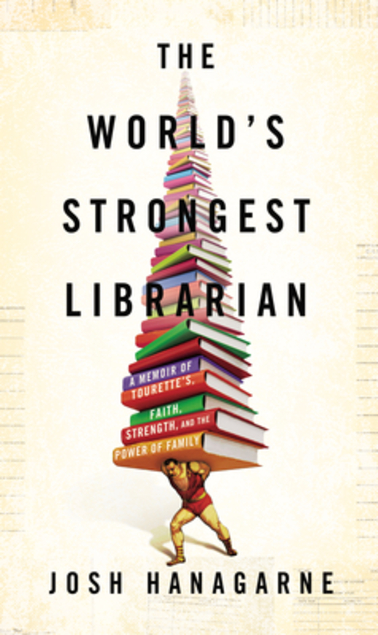
Learning | World's Strongest Librarian


A few months ago, a friend recommended a new book called The World's Strongest Librarian by Josh Hanagarne. It sounded interesting, but I was busy reading a few other books, so I mentally put it on my "get around to reading that someday" list. That's a really long list, by the way.

I nearly forgot about it, until the last day of the Internet Librarian conference in Monterey in late October. The closing keynote speaker was none other than Josh Hanagarne. I heard the buzz of excitement as people talked about it the rest of the day, in between those last few sessions. 

I had not remembered Josh's name, but I did remember the title of his book, and that somebody had recommended it. Something about weight training with a guy who has Asperger's syndrome. Had my friend recommended it to me because of my family's experiences with autistic spectrum disorders? I even remembered the picture on the cover, with a strong man bearing the weight of a seemingly infinite stack of books on his back.


The presentations ended, and we all assembled in a big auditorium to hear the final keynote address. Somebody decided to retract the giant screen that was hanging at the bag of the stage; as the noisy motor started, I heard a bark.  A few minutes later, Steven Abrams began introducing the speaker, who clearly had some tics. Indeed, shortly after he took over the podium, he told us he had Tourette's. He also told us about the strangest comment he had from an audience member--in which he was declared more handsome than Nelson Mandela.

He talked about many of the themes you would expect, if you have read his book: his wonderful family; his struggle to cope with Tourette's; and the central importance of books and libraries for his entire life.

He told touching stories of his interactions with library patrons, many of whom have been down on their luck, and what those patrons have taught him.

He talked a little bit about the physical training that helps him battle his tics.

He also revealed his love of words.  He asked the audience what they thought he told his mother he wanted as a graduation gift, when he earned a college degree. Somehow, even before he said it, I knew he wanted the two-volume set of the Oxford English Dictionary. I don't know how I knew that, but I happen to have the same set in my den. Yes, I got it shortly after I graduated from college. I still treasure it.

He talked about what libraries mean to the public: freedom.  He shared something he learned, from looking up the history of words.  At some point in the past, the verbs love and free meant the same thing. To love is to free.

Josh is a wonderful speaker, and he deserved the standing ovation we gave him. 

Right after the speech finished, I got on my tablet and went to SSJCPL's website to reserve his book. It was waiting for me on the hold shelf when I came back to work that Saturday. I finished it in a couple of days. I probably would have finished it in one day, if real life didn't have a way of interfering with my reading time.


Wednesday, June 19, 2013

Learning | Portmanteaus and Morphemes

I suspect only the nerdiest of us word nerds know the definition of morpheme. I happen to think it's a useful word, for anybody who ponders the meaning of words. A morpheme is the smallest part of a word that conveys meaning, without being able to be divided further. For instance, consider the word suitcase. It is made of two morphemes: suit and case. Morphemes are like the atoms of words; taking them apart further leaves you with letters, that don't particularly mean anything by themselves.

Photo courtesy of mattbuck4950's photostream on Flickr.com. Some rights reserved.


Lately, I've thought about the multiple meanings of the word portmanteau.  I am most familiar with its meaning as a literary device.  A word that is made from the morphemes of other words is called a portmanteau (for example, the term bureaucrazy, to emphasize the madness of bureaucracy.) I wondered why the term portmanteau is used for this device.

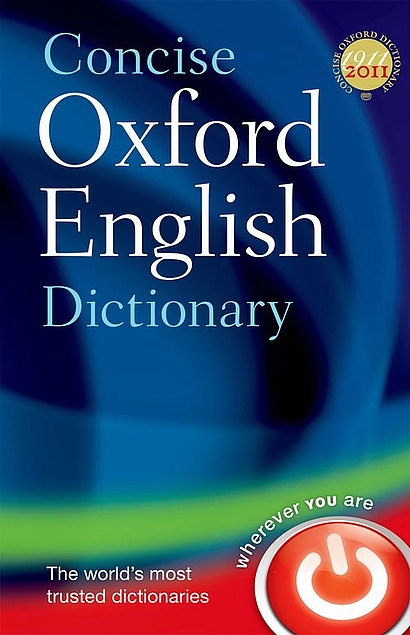
I always turn to a dictionary when I have a question like this. The Concise Oxford English dictionary is available at several of our library branches.  It tells me the word portmanteau came from two French words: porter, meaning carry, plus manteau, meaning mantle.

The orginal definition of portmanteau is a big piece of luggage. As time went on, the term was applied more specifically, to a piece of luggage that opens into two equal parts. 

The word portmanteau  has also become a metaphor for anything that divides into two parts. (It's interesting to note that meanings can continue to expand beyond the morphemes they contain; neither porter nor manteau have anything to do with division into two parts.)

So, it appears that the "two part" concept is the reason the literary device is called a portmanteau.  Whatever you call them, portmanteaus are fun. Yesterday, I laughed when my son described the last slice of cheese in our refrigerator as "provalonely."

What examples of portmanteaus have you heard?  Do you have any favorites? 

P.S.  Since I brought up the subject of luggage in this post, I can't resist mentioning the walking luggage character in Terry Pratchett's Discworld series. This is no ordinary luggage, and I'm not even talking about its ability to walk.


Wednesday, May 29, 2013

Learning | Trebuchets

Guys in armor ready to launch a soccer/foot ball with a trebuchet in Orléans, France. Photo from Charles Hutchins' photostream on Flickr.com. Some rights reserved.
One of the great benefits of reading extensively is the chance to encounter new words, and new contexts for words we have already heard.  For example, take the word "trebuchet." I think the only use I remember seeing for the word is as the name of a font. In fact, it is this font. Our standard font for this blog is called "Trebuchet." Our blogging team chose it because it looks clean and it's easy to read. I wondered about the origin of the name, but never really pursued the matter. 

Then I happened upon the term during an exciting chapter in Jeff Hirsch's Magisterium.  

I should back up and tell you about this book, which is a science fiction story that takes place in the twenty-second century.  A customer told me he thought I would like the book, so I checked it out. I was immediately drawn to the main character, sixteen year old genius  Glennora ("Glenn") Morgan.  Her mother left when she was six. She leads a lonely existence with a father who tinkers obsessively on a project in his workshop. Her main sources of comfort come from her studies (she does extremely well in school, and dreams of traveling to a distant planet,) her devoted cat, and her best friend Kevin. But Kevin's been acting different lately; he seems to think that the authorities are lying to the public about what's on the other side of the Rift, a forest border that protects them from a wasteland. 

I don't want to give too much of the story away, but Glenn and Kevin must flee across the Rift. They are pursued; at one point, the enemy sets up a framework with a thing that looks similar to a catapult--which turns out to be a trebuchet. 
 
So, I won't spoil the story, but I will tell you that reading the book only made me want to read more books by Jeff Hirsch. I hope Magisterium turns out to be part of a series.

I told my son I had just learned the meaning of "trebuchet." He was quite surprised that I didn't know it was an ancient weapon. If it had been short enough to be a Scrabble word, I might have looked it up sooner. If only I had bothered to ask him, he could have told me. 

I don't yet understand why this font is called Trebuchet. I don't see a visual resemblance to the weapon.  Maybe the inventor of the font just liked the name, or liked ancient weapons. Or maybe it is named after a person with the surname Trebuchet.  If I find out, I'll let you know.


If you would like to learn more about trebuchets and catapults than I could possibly tell you, you might like to read William Gurstelle's The art of the catapult : build Greek ballistae, Roman onagers, English trebuchets, and more ancient artillery.

Hmm..."onagers?" Those are weapons? I thought they were animals in the horse family....