Showing posts with label non-fiction. Show all posts

Wednesday, December 10, 2014

Learning | Non-Fiction Christmas Books

It's the most wonderful time of the year.  Maybe we are busy, but I hope we're not too busy to read.  I'd like to point out that SSJCPL has a veritable plethora of Christmas books for your reading pleasure. 

Sure, there are picture books for the wee ones, and stories for us bigger kids of all ages, but today I will draw your attention to non-fiction books about Christmas.

Don't forget that we have books that will teach you how to do things, or tell you why things are the way they are. 


  • Need recipes? We have them.  
  • Craft projects? We have them.  
  • Decorating ideas? Party planning? We have them. 
  • Christmas traditions around the world? We have them. 
  • Christmas music? We have it, in the form of sheet music and recorded music.
Santa and the Rockettes, from Alex's photostream on Flickr.com. Some rights reserved.


There are also some inspirational Christmas books.  I just checked out one of our newest books, Charles Edward Hall's Santa Claus is for Real: a True Christmas Fable About the Magic of Believing. This man learned the true meaning of Christmas, by playing Santa Claus in New York's Radio City Music Hall Christmas Spectacular for nearly three decades.  When he started, he was more like Scrooge than Santa Claus. I can't wait to read about it.

Do you have a favorite Christmas book? Leave a comment below, and tell us about it.

Wednesday, May 14, 2014

Learning | Speakeasies

Here's a sentence I never thought I would type: I recently visited a speakeasy in San Francisco, and it was a learning experience!

Here are a few facts I learned in connection to my visit:


Cocktail,
from Francisco Meirino's photostream on Flickr.com
Some rights reserved.
The term speakeasy reflected the need for secrecy, when serving liquor that was prohibited by the Volstead Act (also known as the Eighteenth Amendment to the United States Constitution.) Customers were asked to "speak easy," to avoid drawing attention to the business. You may have seen movies or cartoons showing people knocking on a door to give a password ("Al sent me") to enter. Speakeasies were also known as blind pigs, or blind tigers. As I poked around for information after my visit, I learned that blind pig probably got its name in the first half of the 19th century, long before the Prohibition Era. Illegal drinking establishments, selling poor-quality, unregulated liquor sometimes skirted the law by charging money to see an interesting pig...and giving a free shot of gin to those who paid admission.

That brings me to the subject of bathtub gin. I have heard that term ever since I was a small child, and thought it meant people used a bathtub to make homemade liquor. (Yuck!!!)  But that's not quite true. People found many ways to make liquor, during the period when they could not buy it, and they did make gin; they made gin in a container that was too large to be filled with water from the sink--it had to be set in the bathtub, in order to add water from the bathtub tap.

Cocktails, or mixed drinks containing alcohol and two or more ingredients, became popular during the Prohibition era. Think about it--in those days, it was much harder to obtain brand-name, quality liquor, so complicated recipes were invented to cover up bad flavors. Some have also observed that cocktails would be more practical in a speakeasy, because they are easier to consume quickly, before running out the back door to escape a raid. 


The term Old-Fashioned was invented to distinguish a simpler, older mixed drink from cocktails, which were considered to be complex.  Old-Fashioneds are made by muddling sugar with bitters, then adding alcohol, and finally a twist of citrus.  (That sounds fairly complicated to me, but, then, I'm not much of a drinker.)

For your vicarious, and totally legal, enjoyment, I have prepared a list of fiction books about Prohibition for adult readers. No pigs required!

If you are interested in historical facts and the social ramifications of the Eighteenth Amendment and its repeal, I have compiled a short list of


Wednesday, April 23, 2014

Learning | Roses

The rosebushes in my backyard are exploding with color right now.  I love to look at them through my kitchen window, or my patio door, or from my deck. After I appreciate their beauty, I start thinking about gratitude. 

I'm glad I was raised by a mother who shared her love of roses with her children.  Every house we lived in had to have roses in the garden. She patiently taught me how to carefully trim rosebushes, to encourage more blooms.  She shared the technique of watering a rosebush at the base, to prevent wet leaves from causing the black spot disease (which was very common in Louisiana.) She had a collection of small vases, suitable for displaying single blossoms. I loved replacing the tired-looking blossoms with fresh cuttings. I can remember a few names of the varieties she grew: Peace, President Lincoln, Queen Elizabeth, Chrysler Imperial, American Beauty, and Freedom.
Peace Rose.  From T.Kiya's photostream on Flickr.com.
Some rights reserved.

I also think about how thankful I am that the previous owners of my house chose to plant so many bushes, and selected such a variety of types.  I don't know the names of all of them.  

Rose lovers (and trivia buffs, and other readers of non-fiction) will appreciate Douglas Brenner & Stephen Scanniello's A Rose by Any Name: the Little-Known Lore and Deep-Rooted History of Rose Names.


Did you know more than 15,000 varieties of roses are cultivated around the world? Brenner and Scanniello tell some interesting tales about the naming of some of them--not just the names, but what certain roses represented in times past. Which rose became a symbol for the American temperance movement? Which rose was named after a not-very-diplomatic diplomat? The answers to all of these questions, and many more, are revealed in this book.


Monday, March 31, 2014

Just Life | Library Treasure Chest

If this library is a treasure box, then non-fiction books are the precious stones of this treasure chest.

Nonfictions are the books that teach us how to cook, how to play the piano, how to tile a floor, or how to speak French. 

Nonfictions tell you what to eat to lower your blood pressure or what exercises to do to alleviate your arthritis.

Nonfiction books run this country.

Did you know that you can download free nonfiction audiobooks from our library Overdrive? 

Right now, I am listening to: Focus:use different ways of seeing the world for success and influence. I downloaded this audio book from the library Overdrive to my smartphone. 

If you have a smartphone, consider downloading the Overdrive Media console app to it and you can listen to audiobooks for free. All your need is your library card number & pin number. 

So, what do you fancy to learn today?

Signing off unitl next Monday- Panteha


Wednesday, October 9, 2013

Learning | Amy Stewart's Non-Fiction


I love getting book recommendations from customers.  

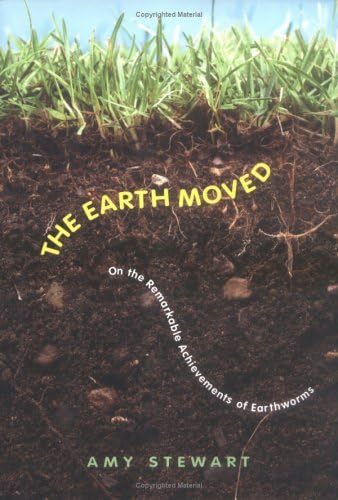
One lady, Donna, always seems to be reading things that look interesting to me. We often talk about the mystery books we like.  Recently, she checked out a book that was not a mystery: Amy Stewart's The Earth Moved: the Remarkable Achievements of Earthworms. I admired the cover, and mentioned that I had always wanted to learn more about earthworms. (Seriously, who has not wondered why they come out of the ground when it rains? I always feel sorry for the ones who stay on the sidewalk and die.  And what's the difference between an earthworm and a nightcrawler?) I checked out the e-book version.


Donna encouraged me to look for other books by Amy Stewart, too. It turns out that Stewart specializes in writing non-fiction books. 


Reviews of Stewart's work tend to use adjectives like "witty" or "quirky." She wrote her first book after she moved from Texas to Santa Cruz, California. She always dreamed of having a garden. So she set about transforming her tiny 1200 square foot yard into one. She researched the subject of gardening by doing it (not unlike my fellow blogger, Tara, in her Short Attention Span Challenge.) 


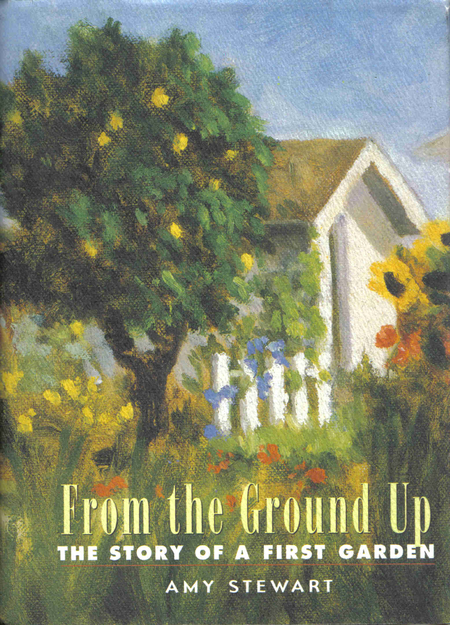
Stewart shared her personal experiences, and lore she discovered along the way. I love the quotes she included from old gardening books. I also enjoyed hearing how others shared heirloom seeds with her, especially the story about the little tomato her grandmother sent in the mail. Then there was the time she hired some men to dig in her yard and amend the soil; after she explained what needed to be done, she grabbed her gloves and shovel, and proceeded to work alongside them, all day long. All of that work resulted in From the Ground Up: the Story of a First Garden.


Glancing over the list of Stewart's titles, I realize they all are somehow related to gardens and pests, botany and bugs.  She has an eye for interesting facts about plants and insects. From the Ground Up and Flower Confidential: the Good, the Bad and the Beautiful in the Business of Flowers have chapters which should be read in order because of their logical progression.  As mentioned above, the first book is her own story, so it is written as a first-person narrative.  

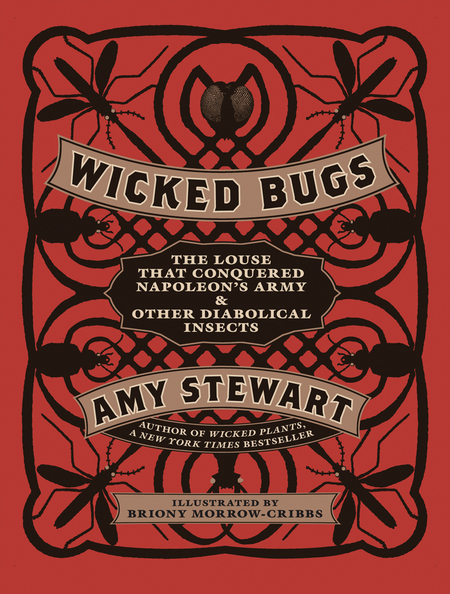
The other books are equally interesting, and the chapters are organized in a logical heirarchy, but reading the chapters in random order would be no problem. These are the kinds of books I like to read in a doctor's waiting room, or an airport. Here's a sample from Wicked Bugs,  on page 94, under the "Destructive" section, in an entry called "The Gardener's Dirty Dozen:" "They may not change the course of civilization. They might not spread the plague or send villagers fleeing for the hills. And they've probably never been implicated in a murder--although they do inspire murderous rages. These are just some of the pests that drive gardeners mad."  

I, for one, am glad Amy Stewart is able to share her interests so eloquently.


Wednesday, October 2, 2013

Learning | The Conquest of the Ocean


[Cover]Author Brian Lavery tackles a vast subject in this new non-fiction Dorling-Kindersley book for adults. It examines the history of seafaring all over the world, including exploration, ship design, cultures, trade routes, slave ships, and much more.

The Dorling-Kindersley publishing company is well known for its beautifully illustrated children's books on all sorts of scientific and historical topics. I see children check them out to use in reports, but I also see them check them out just for fun. 

I'm glad to see that some of that fun is present in this title for grown-ups. There are beautiful, easy-to-read maps, drawings and photographs that enrich the impact of the informative text. It would be helpful to students doing reports on various subjects, but it's also entertaining for anybody interested in ships, the ocean, different cultures, and history.

Compasses
Mayan Codex


This book is recommended for readers from 8th grade and up.

The Spanish Armada
__________________________________________________________________________

Tuesday, June 18, 2013

4 Kids | I Dare You

It's summer. No school. You've got nothing but time to do whatever you want! Yes, you can play outside, go swimming, practice baseball or soccer at the park, hang out with friends, etc., etc., etc. 

But right here, right now, I dare you to do something different. Learn something new! Seriously.

SSJCPL branches have the most awesome collection of non-fiction books for kids (that's informational books, by the way). They are filled with tons of cool information and great pictures.

So do it. I dare you. Learn something new.

by Etta Kaner. In this unique facts book, animals compete in sporting events such as high jump, swimming and weight lifting. Readers are encouraged to guess which animal will win before turning the page, while walrus and cockatoo "announcers" provide funny commentary and interesting statistics about the athletes' amazing abilities. So learn all about which animals can be faster, stronger and more powerful, and how humans compare!


I Wonder Why Volcanoes Blow Their Tops: And Other Questions About Natural Disasters by Rosie Greenwood. Learn everything you ever wanted to know about volcanoes in this easy question-and-answer format. Then amaze your friends and family with your indepth knowledge of all things volcano!


Get outside, explore and have fun. Using natural materials, you can learn how to make things AND cook things. One of the crafts involves making paper from corn! Who knew?


Our Rights: How Kids Are Changing the World by Janet Wilson. This around-the-world tour introduces readers to children who have taken on the role of social activist, fighting for human rights and social justice in countries as diverse as Yemen and Congo, Canada and the United States. For example, Anita Khushwaha fought against gender and class bias in her community in India. Emman Bagual founded Mind Your Rights to fight child labor in the Philippines. Zach Bonner walked 1,000 miles to raise awareness about homeless children in the United States. A diverse range of other issues is covered, including aboriginal rights, human trafficking and child soldiers, and the full United Nations Convention on the Rights of the Child can be found alongside tips for how kids everywhere can make a difference.

Once again, I dare you: Learn something NEW. Expand your mind. 

And enjoy your summer!!

Happy reading!

Saturday, April 20, 2013

Books On Film | The Social Network

The Accidental Billionaires by Ben Mezrich, written in a narrative style, details the founding and evolution of Facebook. In particular, it focuses on the relationships between the founding members of the company.

The book is based on conversations Mezrich hadwith Facebook co-founder Eduardo Saverin and information he gained from reading the court documents of the, then on-going, lawsuit between the two. Mark Zuckerberg refused to be interviewed for the book.

The award winning film The Social Network (2010) was based on this book, but the film should not be considered a biopic. While it follows a lot of the story laid out by Mezrich some parts of the story are heavily fictionalized for the sake of drama and storytelling. Nevertheless, the film is a very good film and if you enjoyed it you may want to take a peak at the book for the less fictionalized, but no less dramatic, version of the story.

Covers Courtesy of LibraryThing