Showing posts with label Discworld. Show all posts

Wednesday, March 25, 2015

Learning | Ook.

Sir Terry Pratchett passed away on March 12, 2015.  Readers around the world mourn the loss of the creator of the comic fantasy Discworld series. Discworld is a flat world that rests on the backs of four elephants; those elephants, in turn, are standing on the back of a giant turtle.  If you are able to accept that premise, and even laugh at it, you would probably enjoy reading books in the Discworld series.


0504 9757 Sir Terry Pratchett,
from Steve James' photostream on Flickr.com
Some rights reserved.
 My friend, Elsbeth, pointed out that there is no need to read Discworld books in the order that they were published. It's true. Different books satirize different aspects of the real world. (There are even parodies of the fantasy genre.) Various titles spoof tourism, war, bureaucracy, prejudice, jingoism, Ancient Egypt, opera, journalism...the list goes on and on. Characters recur in subsequent books, but there are always new characters. 


For instance, there is a certain librarian in the first two books, who works for Unseen University.  He is accidentally transformed into an orangutan in the second book.  He won't allow anybody to change him back (after all, he can climb up to the highest shelves with ease.) He recurs in many of the later books. 

You'll sometimes see a piece of luggage wander into the action at the most interesting moments. It wanders around because it's made of sapient pearwood (which is magical.) It can sprout hundreds of little legs, enabling it to run away very quickly. It has multiple functions--carrying its owner's luggage, and acting as a bodyguard. In the novel Sourcery, it is described as "half luggage, half homicidal maniac." (Note: SSJCPL no longer has any copies of Sourcery in its catalog. You'll need to get it from Link+.)

Pyramids, Discworld #7, from
 sdoble's photostream on Flickr.com.
Some rights reserved.
It seems as though there's a guild for everything in Ankh-Morpork, the large, bustling city that provides a setting in many of the Discworld books. 

There's even a guild for assassins. Here's a nice, juicy quote about the members of that guild, from Pyramids: 

"All assassins had a full-length mirror in their rooms, because it would be a terrible insult to anyone to kill them when you were badly dressed."

Pyramids is a good book to start with, if you haven't read anything else about Discworld.


"Pratchett is my hero..."
 from Robert N's photostream on Flickr.com.
Some rights reserved.


Most of Pratchett's books were written for an adult audience, but there is also a series for children ages 8 and up, called the Johnny Maxwell Trilogy.

Pratchett wrote a number of books for a teen audience. I am especially partial to the Tiffany Aching series.  You'll want to read those in order, to follow Tiffany's progress as she grows up; start with The Wee Free Men.


You may be wondering about the title of this blog post. When the Librarian at Unseen University became an orangutan, he lost all speech, except for "ook," and the occasional "eek." He communicates remarkably well, using different inflections for "ook." It might be "ook?" or "ook!" or "oooooook!"

Wednesday, July 24, 2013

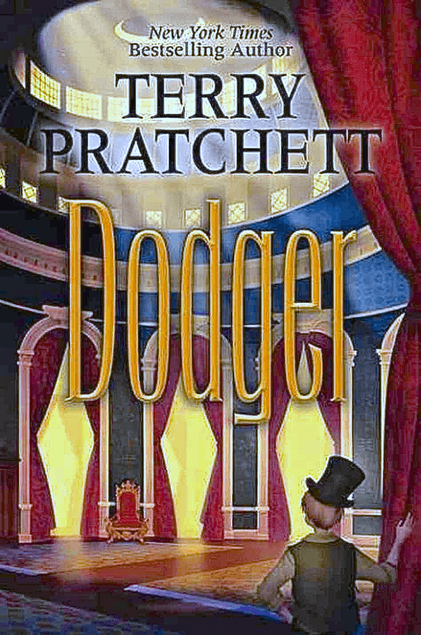
Learning | Dodger

I was excited to see that the library recently purchased a new book by one of my favorite authors, Sir Terry Pratchett.  He wrote so many books for his comic fantasy Discworld series, that I was sure this new one was part of it. Upon further investigation, I learned that his 40th Discworld book, Raising Steam, will be published in the fall of 2013, but the new book, Dodger, is a horse of a different color.

The title made me think of a Dickens character called the "Artful Dodger." I was not surprised to learn that he is the main character of this book, but it was a surprise that this is not set in Discworld, but in the London of the early Victorian period. 

Discworld books are hilarious parodies of all sorts of topics in our world: myths, history, literature, entertainment--you name it.  The humor is still in Dodger, but Pratchett does attempt to avoid too much over-the-top anachronism and fantasy here. What's really cool is that Dodger encounters quite a few actual historical figures in the course of this story. It's easy to imagine Charles Dickens (one of the first people he meets) becoming inspired by a real "Dodger" like Pratchett's. 

If you haven't read Charles Dickens' Oliver Twist, you should. It's a story about a boy, who escapes an orphanage and comes to London to seek his fortune.  He joins a gang of young thieves, which includes the Artful Dodger. We eventually learn Oliver's true identity, but I don't want to give too much of the story away,  to those unfamiliar with it. 

Dickens was paid by the word, so this is a long book with a lot of description. It's generally considered to be appropriate for Grade 6 and up. The book is considered a classic; it has been made into several movies, and even a musical. I remember reading the book before I saw the movie version of the musical Oliver!, which was released in 1968. Comedians, and even TV commercials ("MORE PUDDING?"), have parodied a memorable scene in the workhouse, when little Oliver asks for more to eat, and the man is astonished at his audacity.  

Image courtesy of El Bibliomata's photostream on Flickr.com. Some rights reserved.

Dickens helped to expose some atrocious social conditions in his city. Pratchett explores these same conditions, but with a different point of view: Dodger's.  Dodger is uneducated, but streetwise, and he has a tendency to think more philosophically than one might expect.  For example, see this passage, right after Dodger has been informed that there are other planets besides Earth, and they all revolve around the sun:

"It seemed to Dodger that everything he was told by Solomon stuck him like a silver pin, which didn't hurt but filled him up with a sort of fuzz. He was beginning to see a world that stretched far beyond the tunnels beneath the streets--a world that was filled with things he didn't know. Things he hadn't even known he didn't know until now. Things he realized with a jolt that he wanted to know about. He wonder too if maybe Simplicity might be even more interested in a man who knew this kind of thing--and he realized how much he was looking forward to seeing her again."

Terry Pratchett's Dodger introduced me to a few new words, or at least, in the case of "geezer," a different meaning than I thought it had.


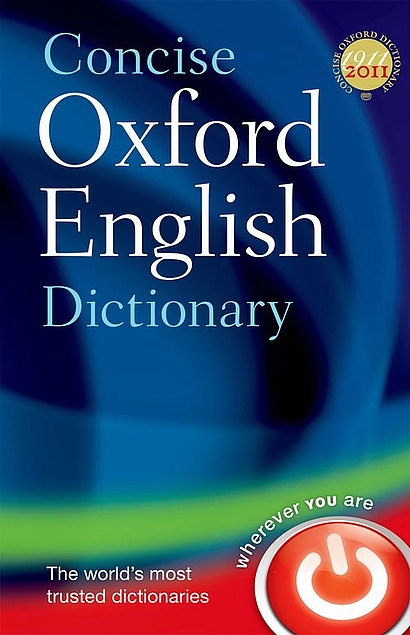
  • Tosher: this is a person who makes a living by finding lost or discarded things of value in the sewer.  I couldn't even find this term in the Concise Oxford English Dictionary, but it does have the word "tosh," which means rubbish or nonsense.
  • Geezer: The same dictionary defines this word the way I have understood it, a derogatory term for an old man, but it has a very different meaning in Dodger. Perhaps the words of the character Sharp Bob explain it the best: "A geezer, now, well, a geezer is somebody that everybody knows and he knows everybody, and maybe he knows something about everyone he knows that maybe you wished he didn't know. Um, and well, he's sharp, crafty, um, not exactly a thief but somehow things find their way into his hands. Doesn't mind a bit of mischief, and wears the street like an overcoat."
  • Peeler: a police officer. This slang term comes from the name of Sir Robert Peel, the founder of the Metropolitan Police Department. I'm more familiar with "bobby" as the term for a police officer; this name also comes from Sir Robert Peel. Sir Robert is one of the historical figures Dodger encounters in this novel.
If you like Pratchett, or Dickens, or history, I think you might enjoy Dodger. If you read it, let me know what you think--and tell me which interesting words you found.


Wednesday, June 19, 2013

Learning | Portmanteaus and Morphemes

I suspect only the nerdiest of us word nerds know the definition of morpheme. I happen to think it's a useful word, for anybody who ponders the meaning of words. A morpheme is the smallest part of a word that conveys meaning, without being able to be divided further. For instance, consider the word suitcase. It is made of two morphemes: suit and case. Morphemes are like the atoms of words; taking them apart further leaves you with letters, that don't particularly mean anything by themselves.

Photo courtesy of mattbuck4950's photostream on Flickr.com. Some rights reserved.


Lately, I've thought about the multiple meanings of the word portmanteau.  I am most familiar with its meaning as a literary device.  A word that is made from the morphemes of other words is called a portmanteau (for example, the term bureaucrazy, to emphasize the madness of bureaucracy.) I wondered why the term portmanteau is used for this device.

I always turn to a dictionary when I have a question like this. The Concise Oxford English dictionary is available at several of our library branches.  It tells me the word portmanteau came from two French words: porter, meaning carry, plus manteau, meaning mantle.

The orginal definition of portmanteau is a big piece of luggage. As time went on, the term was applied more specifically, to a piece of luggage that opens into two equal parts. 

The word portmanteau  has also become a metaphor for anything that divides into two parts. (It's interesting to note that meanings can continue to expand beyond the morphemes they contain; neither porter nor manteau have anything to do with division into two parts.)

So, it appears that the "two part" concept is the reason the literary device is called a portmanteau.  Whatever you call them, portmanteaus are fun. Yesterday, I laughed when my son described the last slice of cheese in our refrigerator as "provalonely."

What examples of portmanteaus have you heard?  Do you have any favorites? 

P.S.  Since I brought up the subject of luggage in this post, I can't resist mentioning the walking luggage character in Terry Pratchett's Discworld series. This is no ordinary luggage, and I'm not even talking about its ability to walk.