Showing posts with label Oxford English Dictionary. Show all posts

Wednesday, April 29, 2015

Learning | Apronym and Kibosh

I stumbled across a new word today, while I was trying to look up the origin of another word.  It all started when I used the word "kibosh" in conversation recently. You know, as in, putting the kibosh on something, to stop it. I knew what it meant, from context, but I really had no idea where it came from. So I decided to look it up. 
The Oxford English Dictionary (Cake!)

from Pete Prodoehl's photostream on Flickr.com.


I would love to have this on my birthday cake!

I looked for kibosh in the Oxford English Dictionary. The OED is considered the best source for looking up word origins, but it wasn't much help this time. It declares the origin obscure (meaning nobody knows where the word originated,) but it also mentions that it could be Yiddish or Anglo-Hebraic. 

I decided to check our electronic databases. I didn't know if they would be any help, but I thought there might be an obscure article in a scholarly journal in there somewhere. So I went to Academic Search Premiere, and typed in "kibosh."  

That brought up too many news articles with headlines talking about putting the kibosh on things. 

I narrowed my results to scholarly journals. That cleared things up; instead of 66 articles, I had four. One of those four had a word in the title that I had never heard before: apronym. (The word kibosh was also in the article, as part of an apronym for BLOCKAGE; the article was not about the origin of kibosh.) 


Shoemaker in apron, holding his tools. (Cropped.)
from George Eastman House's photostream on Flickr.com.
No known copyright issues.
Never mind kibosh! 

I had to know more about apronym and its meaning. The word I accidentally found has nothing to do with the names of aprons. 

Apronym is a relatively new word; it is a portmanteau of the words a propos and acronym. (For a discussion of portmanteaus, just click on the above link to my 2013 post about them.)

Here's a link to the article where I found the word apronym. It gives some fun examples of apronyms, in which are acronyms that form a real word, with the words that form the acronym relating to the meaning of the word. For example, Seasonal Affective Disorder has an apronym of SAD. It might help to think of apronyms as plays on words, like puns.

Wednesday, August 6, 2014

Learning | Tride and True? I thought it was Tried and True.


I always heard an expression that I thought was tried and true. I would hear the phrase to describe something (usually a product, but sometimes a method) that was reliable. It sounded like it meant tested and therefore proven. 

I suppose I never saw it in writing, because it surprised me when I saw it written as "tride and true." This was on Facebook, and I suspected it was a typographical error. But I looked it up, and tride is a real word.

I work at Cesar Chavez Central Library now, so I was able to consult a printed volume of the Oxford English Dictionary for the definitions of tride and tried! I expect few people will find that as exciting as I do, but I must remind you: I am a word nerd.

So the OED says that tride was an old adjective used by horsemen related to gait and pace, meaning short and swift, or short and nimble. Either way, it sounds like a reliable horse to me.


The Gingerbread Horse Runs Through the Pasture
from Pete Markham's photostream on Flickr.comSome rights reserved.


But a second definition, also obsolete, is the past tense and participle of try. So it is another way of spelling tried. So we are back to my original understanding of the phrase as tried and true, more or less meaning that a thing or method has proven reliable.


Tried and True" handpainted sign
from Damon Styer's photostream on Flickr.com.  
Some Rights reserved.


I won't call the Facebook post I saw a typo, since technically tride is an older spelling of tried, but I think the phrase usually is written as tried and true. When I looked up the entire phrase in the OED, it appeared under tried, but not tride.  That settles the question for me.


Wednesday, November 13, 2013

Learning | World's Strongest Librarian


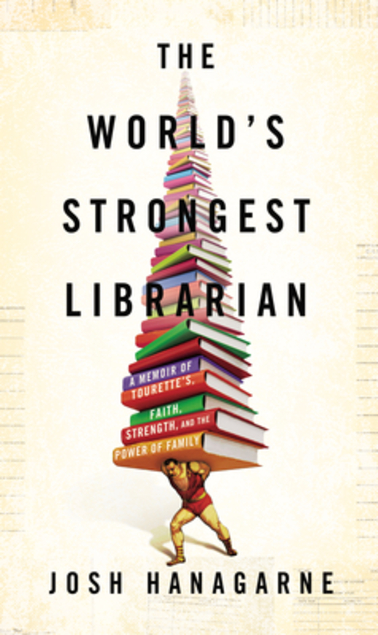
A few months ago, a friend recommended a new book called The World's Strongest Librarian by Josh Hanagarne. It sounded interesting, but I was busy reading a few other books, so I mentally put it on my "get around to reading that someday" list. That's a really long list, by the way.

I nearly forgot about it, until the last day of the Internet Librarian conference in Monterey in late October. The closing keynote speaker was none other than Josh Hanagarne. I heard the buzz of excitement as people talked about it the rest of the day, in between those last few sessions. 

I had not remembered Josh's name, but I did remember the title of his book, and that somebody had recommended it. Something about weight training with a guy who has Asperger's syndrome. Had my friend recommended it to me because of my family's experiences with autistic spectrum disorders? I even remembered the picture on the cover, with a strong man bearing the weight of a seemingly infinite stack of books on his back.


The presentations ended, and we all assembled in a big auditorium to hear the final keynote address. Somebody decided to retract the giant screen that was hanging at the bag of the stage; as the noisy motor started, I heard a bark.  A few minutes later, Steven Abrams began introducing the speaker, who clearly had some tics. Indeed, shortly after he took over the podium, he told us he had Tourette's. He also told us about the strangest comment he had from an audience member--in which he was declared more handsome than Nelson Mandela.

He talked about many of the themes you would expect, if you have read his book: his wonderful family; his struggle to cope with Tourette's; and the central importance of books and libraries for his entire life.

He told touching stories of his interactions with library patrons, many of whom have been down on their luck, and what those patrons have taught him.

He talked a little bit about the physical training that helps him battle his tics.

He also revealed his love of words.  He asked the audience what they thought he told his mother he wanted as a graduation gift, when he earned a college degree. Somehow, even before he said it, I knew he wanted the two-volume set of the Oxford English Dictionary. I don't know how I knew that, but I happen to have the same set in my den. Yes, I got it shortly after I graduated from college. I still treasure it.

He talked about what libraries mean to the public: freedom.  He shared something he learned, from looking up the history of words.  At some point in the past, the verbs love and free meant the same thing. To love is to free.

Josh is a wonderful speaker, and he deserved the standing ovation we gave him. 

Right after the speech finished, I got on my tablet and went to SSJCPL's website to reserve his book. It was waiting for me on the hold shelf when I came back to work that Saturday. I finished it in a couple of days. I probably would have finished it in one day, if real life didn't have a way of interfering with my reading time.