Showing posts with label dictionaries. Show all posts

Wednesday, November 5, 2014

Learning | Happenstance and Q

Happenstance is only about 120 years old or so, which is not terribly old, as English words go.  I don't hear it used very often, but I've always liked the word. 

Happenstance is a portmanteau of the words happen and circumstance.

Recently, I was searching for pictures on Flickr.com, using the search term words. Happenstance brought me to this photograph of a page from a Finnish dictionary, showing all of the words beginning with the letter Q.


All the words beginning with Q in the Finnish dictionary, from hugovk's photostream on Flickr.com. Some rights reserved.


I love this picture, because I learned a few things from it:  


  • I'm not familiar with the Finnish language at all, so I was intrigued to see that so few words begin with the letter Q. Q is not a very common letter in English, but we have many more Q words than the Finnish.
  • I nearly knew what all five of those Finnish Q words meant! Three of them were place names, that are spelled the same way as they are in English.  
  • I knew Quisling meant traitor who collaborates with an enemy force occupying their own country, from studying history during the World War II era. 
  • I had an idea what QWERTY-näppäimistö meant, because the letters QWERTY are the first five letters on most computer keyboards.  In fact, we usually call that type of keyboard a QWERTY keyboard.  So I went to Google Translate, and pasted in the word QWERTY-näppäimistö. Just as I suspected, it means qwerty keyboard. If you would like to hear how to pronounce the word, just copy and paste it into the Google Translate window.
  • Looking at this picture made me think about the Finnish language. I'm quite unfamiliar with the language. I never see people asking for, or checking out books about, the Finnish Language.  So I went to our shiny new library catalog and found a few. There are two different Finnish-English,English-Finnish dictionaries at Cesar Chavez Central Library. Chavez also has a Finnish Reader, in the government documents section of the Storage Area downstairs. It's from 1968!

Wednesday, July 30, 2014

Learning | Perspicacious and Perspicuous


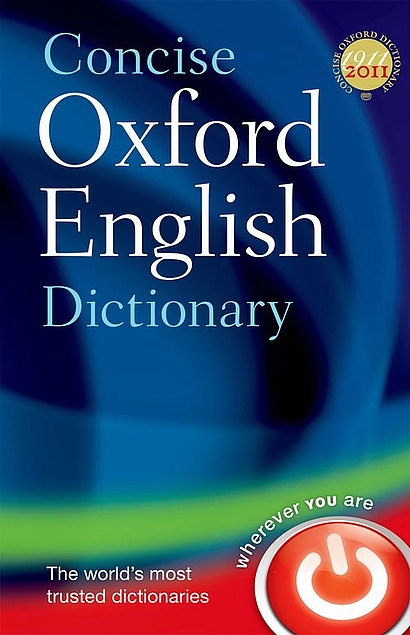
Perspicacious, according to the Concise Oxford English Dictionary, is an adjective meaning "having a ready insight into and understanding of things." There are a few derivative forms of perspicacious. The adverb form of this word is perspicaciously, and the noun is perspicacity.


Perspicacity is a desirable quality in many professions, especially those that require a lot of troubleshooting. These fellows depicted below look mighty perspicacious. They seem to know exactly what needs to be done--just the kind of mechanics I would want working on my car.


Perspicuous is a related adjective, meaning "clearly expressed and easily understood; lucid." It has a second definition, referring to a person, meaning "expressing things clearly."

1963 Television Eyeglasses. From James Vaughn's photostream on Flickr.com. Some Rights reserved.


The television eyeglasses pictured below are perspicuous, but not because they help the guy in the photo see television better; they actually don't work. The gentleman below is inventor and futurist Hugo Gernsback. He is modeling a mock-up of a product he believed would be available soon--so the mock-up perspicuously demonstrates his concept.


The picture makes me think of two things: 

1. First, in the 1960s, parents were always telling children not to sit too close to the television set, "or you'll go blind!" I can't imagine this item would have sold very well in those days, because people would have been afraid of it.

2. One might say Hugo Gernsback predicted Google Glass!

Wednesday, June 19, 2013

Learning | Portmanteaus and Morphemes

I suspect only the nerdiest of us word nerds know the definition of morpheme. I happen to think it's a useful word, for anybody who ponders the meaning of words. A morpheme is the smallest part of a word that conveys meaning, without being able to be divided further. For instance, consider the word suitcase. It is made of two morphemes: suit and case. Morphemes are like the atoms of words; taking them apart further leaves you with letters, that don't particularly mean anything by themselves.

Photo courtesy of mattbuck4950's photostream on Flickr.com. Some rights reserved.


Lately, I've thought about the multiple meanings of the word portmanteau.  I am most familiar with its meaning as a literary device.  A word that is made from the morphemes of other words is called a portmanteau (for example, the term bureaucrazy, to emphasize the madness of bureaucracy.) I wondered why the term portmanteau is used for this device.

I always turn to a dictionary when I have a question like this. The Concise Oxford English dictionary is available at several of our library branches.  It tells me the word portmanteau came from two French words: porter, meaning carry, plus manteau, meaning mantle.

The orginal definition of portmanteau is a big piece of luggage. As time went on, the term was applied more specifically, to a piece of luggage that opens into two equal parts. 

The word portmanteau  has also become a metaphor for anything that divides into two parts. (It's interesting to note that meanings can continue to expand beyond the morphemes they contain; neither porter nor manteau have anything to do with division into two parts.)

So, it appears that the "two part" concept is the reason the literary device is called a portmanteau.  Whatever you call them, portmanteaus are fun. Yesterday, I laughed when my son described the last slice of cheese in our refrigerator as "provalonely."

What examples of portmanteaus have you heard?  Do you have any favorites? 

P.S.  Since I brought up the subject of luggage in this post, I can't resist mentioning the walking luggage character in Terry Pratchett's Discworld series. This is no ordinary luggage, and I'm not even talking about its ability to walk.


Wednesday, November 21, 2012

Learning | Grateful for Word Nerds

I mentioned in a previous post that I love reading dictionaries.  It should come as no surprise that I consider myself a word nerd.  My best  friend, Roberta, recently reminded me of the time she gave me some lotion from the Dead Sea.   "The packaging was written in a galoompty different languages, and you mentioned that that was as much fun as the lotion."   

Ladyfingers & Nun's Tummies
Of course, my best friend is also a word nerd. She made up the word "galoompty" while she was dreaming.  In her dream, she needed a term for an impossibly big number -- and her subconscious rewarded her with "tri-galoompty oompty." 

There's a customer named Marian, who knows I like big words -- we talk about interesting words in book titles.  Recently, she kindly brought me a printout of an email about a cool word: paraprosdokian. Paraprosdokians are figures of speech which have a surprise at the end.  For example, "I used to be indecisive; now I'm not so sure."  I understand the term comes from Greek terms for "against" and "expectation."

The Meaning of Everything
This holiday season, I'm thankful for books about words, like Ladyfingers & Nun's Tummies: a Lighthearted Look at How Foods Got Their Names (I love the examples of foods named by mistake) and The Meaning of Everything: The Story of the Oxford English Dictionary

True word nerds know that the Oxford English Dictionary, or OED, is the definitive source on words in the English language.  There's a copy of the OED in the reference section of Cesar Chavez Central Library. (Sorry, word nerds, but we need to use it in the library. Since it is 20 volumes long, that may be a good thing--can you imagine trying to schlep that thing home, or fit it in the book drop?)


Wednesday, October 3, 2012

Learning | Introduction: Learning is Fun

This blog will meander through different topics related to learning. At various times, I'll talk about parenting, or teaching, mostly in the context of having fun.  I consider myself a lifelong learner, and hope that my children will do the same.

I'm the youngest of six children (three boys, and three girls, kind of like family in the The Brady Bunch TV series, except that all six of us had the same biological parents.) Think of me as Cindy Brady, without the curls. 

Carol Brady's question, "What have we learned from this?" reminds me of answering to my own parents. It's a question I throw out to my own sons occasionally. Regardless of the reason I ask the question, they usually answer, "Not to play ball in the house!" before giving the matter any serious thought.

I was lucky enough to be raised by parents who valued education, reading, and libraries. We always had plenty of books around the house. My parents read to me, and my siblings read to me; some of them even listened patiently as I learned to read to them.

I read nearly everything I could get my hands on, particularly encyclopedias and dictionaries.  A special favorite of mine was the set of Golden Book Encyclopedias.  I could pick up any volume and find something to read.  It was fun discovering things like banyan trees, or pyramids. Our SSJCPL Kids Page has some sites that will allow curious young people to have a similar pleasure.

Alas, the Golden Book Encyclopedia is no longer in print, but I picked up a set at a Friends of the Tracy Library book sale a few years ago.  I adore these books with alliterative collages on the covers.  The "Chalk to Czechoslovakia" volume, depicted below, shows a clock, compass, cotton, chemist, and coral, among other things. How many more items can you identify in this picture?

"Golden Book Encyclopedias Vol. 4 - Chalk to Czechoslovakia - Back Cover" by Thoth, God of Knowledge, on Flickr