Showing posts with label adult books. Show all posts

Saturday, April 18, 2015

Books On Film | Child 44


The film adaptation of Tom Rob Smith's first book Child 44 will be released this weekend. The movie adaptation stars Tom Hardy as the main character Leo Demidov.
In the years following World War II, Joseph Stalin establishes great power and control over the Russian people; citizens are deceitfully told that their country is free from crime and offenders. However, a serial killer targeting children is, in fact, on the loose. And now, Leo Demidov, a decorated soldier, must locate this murderer while keeping his capture a secret.

Saturday, April 11, 2015

Books On Film | The Longest Ride & True Story


The Longest Ride, latest in a long line of adaptions of Nicholas Spark's work, will premiere this weekend. This book tells two different love stories taking place at two different times.

After being trapped in an isolated car crash, the life of an elderly widower becomes entwined with that of a young college student and the cowboy she loves.

True Story, based on the memoir True Story: Murder, Memoir, Mea Culpa will also premiere this weekend in a limited release. The film will star James Franco as Christian Longo and Jonah Hills as Michael Finkel.
A young, highly intelligent man named Christian Longo, on the FBI's Ten Most Wanted list for killing his entire family, has recently been captured in Mexico, where he'd taken on a new identity - Michael Finkel of the New York Times." "The next day, on page A-3 of the Times, comes another bit of troubling news: a note, written by the paper's editors, explaining that Finkel has falsified parts of an investigative article and has been fired. This unlikely confluence sets the stage for a bizarre and intense relationship.

Saturday, April 4, 2015

Books On Film | The Passion of The Christ


Since Easter is around the corner, here is an Easter-adjacent adaptation. The film, The Passion of The Christ, was released in 2004 and directed and co-written by Mel Gibson. It depicts a short time period in the story of Jesus' life known as the Passion*, starting with a visit to Jerusalem and ending in his crucifixion

The film was based mainly on Gospels of Matthew, Mark, Luke and John from The Bible (Holy Scriptures of Christianity), The Tanakh (the Holy Scriptures of Judaism), and The Dolorous Passion of Our Lord Jesus Chris by Anne Catherine Emmerich, a German nun who claimed to have had religious visions of the Passion. 


*Latin: passio means suffering.

Wednesday, March 18, 2015

Learning | Marginalia

Let's explore the subject of writing in books. Not writing books; taking a physical copy of a published work, and marking it in some way.  

Most of us have put our name on the flyleaf of a book we own; when I was a new reader and writer, I think I did that to every book I owned. I was proud of owning the books, but probably even more proud that I could express myself (in a very small way) in writing.

When I was older, I would underline (I'm not sure I was aware of highlighters yet, if they had been invented) important passages in books I was reading for English classes. (I'm not talking about school-owned books; I'm remembering the paperback copies of classic books, which I purchased.)

In tenth grade, my best friend, Roberta and I took this to a whole new level. That year, we had the same English teacher, Ms. Newman, but I was in the second period class, and Roberta was in the third period class. (Or maybe it was the other way around. We often mix ourselves up with each  other.)  

It was the year we read Julius Caesar.
Each of us had a paperback copy of the play. We were discussing it every day in class for what seemed like forever. Maybe it was a month? A few weeks? I don't know. I started out the usual way, underlining important phrases and noting important thoughts in the margins. 

Then, I think I started putting thought bubbles on the illustrations.  Two centurions were standing right next two each other, and I made one say,"Don't I know you from junior high school?"  

It was an inside joke.  I had recently been in a crowd at Mardi Gras, and I had heard one drag queen say that to another. They were both so heavily made up and gorgeously costumed, I wondered how the one guy had even recognized the other.  So the drawing of these centurions holding spears, wearing armor and helmets, struck me as a depiction of a similar situation.
Roman augur,
Image from page 246 of "The standard edition of the pictorial Shakspere" (1846)
From Internet Archive Book Images' photostream on Flickr.com.
No known copyright restrictions.


Roberta and I started exchanging our copies of Julius Caesar, as one of us ascended the stairs, and the other descended.  

Those Julius Caesars filled up with drawings, thought bubbles, fake footnotes at other comments. One of the real footnotes contained the phrase,"Elizabethan audiences delighted in such puns."  So we looked for more puns in the play, and added more footnotes. 
Just imagine the thought bubbles that could be added to this picture, or maybe a funny caption.
Image from page 237 of "Julius Caesar and the foundation of the Roman imperial system" (1894),
from Internet Archive Book Images' photostream on Flickr.com. No known copyright restrictions.

True to form, we keep forgetting where those Julius Caesars are, but we still occasionally get together and read them and laugh our heads off.

Today's word is marginalia. It simply means notes in the margin or margins of a book. That makes sense.  But I just had to look up the origin of the word margin, while I was at it. It comes from Latin, as many book terms do, and it originally meant the edge of a sea or lake. I like that. It makes me want to compare discovering marginalia in books to finding things washed up on the beach.

There's a new book out called Letter to a Future Lover: Marginalia, Errata, Secrets, Inscriptions, and Other Ephemera Found in Libraries. 
Author Ander Monson has gathered examples of all sorts of books that have been marked up in one way or another. This book is loaded with Monson's essays on a wide range of subjects, including errata, permanence, time, computer punch cards, and a dead poet. It's one of those books that are wonderful to open at any random page, and find a gem.

Have fun with marginalia! But, whatever you do, don't write in a book that belongs to somebody else, without their permission. And NEVER write in a library book. Please.

Saturday, February 28, 2015

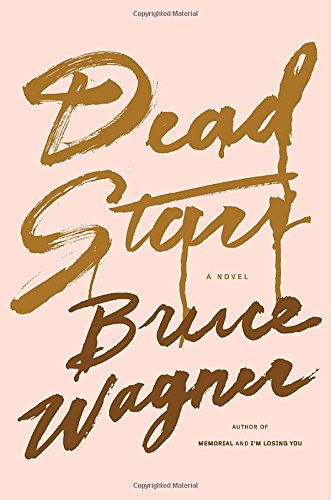
Books On Film | Dead Stars


Author and screenwriter Bruce Wagner's novel Dead Stars is based on the screenplay he wrote for the film Map to the Stars after plans to make the film fell through. Well, now the film is back on and will be released this weekend. Dead Stars chronicles a slew of characters chasing the ever elusive fifteen minutes of fame.
Traces the experiences of very young breast cancer survivor Telma, who crosses paths with actor Michael Douglas during the latter's efforts to achieve his professional dream against a backdrop of riotous Hollywood culture.

Saturday, January 24, 2015

Learning | Montmartre

Montmarte's been on my mind lately, because of a few books I've been reading. You know Montmarte, the section of Paris with the Can Can dancers, artists, and Bohemian lifestyle at the end of the nineteenth century? The name conjures up visions of the Moulin Rouge, and Henri de Toulouse-Lautrec.

Toulouse-Lautrec. Image from page 9 of "Le peintre-graveur illustré : (xix et xx siècles)" (1906)
from the Internet Archive Book Images' photostream on  Flickr.com.
No known copyright restrictions.
The name Montmartre means "Mountain of the Martyr," referring to St. Denis, who is said to have been beheaded on this hill in 250 A.D. It's interesting to note that the older, Roman name for this place is Mons Martis (Mount of Mars.) Here's a YouTube video, with the English pronunciation of the word:


If you would prefer to say a French place name as the French do, you can visit Forvo.com to listen to French speakers speaking the word.

There's an amusing quote about pronunciation of Montmartre in C. Alan Bradley's latest mystery, As Chimney Sweepers Come to Dust: A Flavia de Luce Novel. Flavia described a facial characteristic that "can come only from speaking French from the cradle." She deduces which faculty member at her new school is the French teacher because of this trait; she supports her conclusion in a discussion of a woman in Bishop's Lacey, England. "She was from Montmartre, pronounced through the nose." 

Flavia says so many pithy things, that I probably would not have noticed the Montmartre reference, if I had not just finished reading a more macabre mystery. The Devil in Montmartre: a mystery in fin-de-siècle Paris by Gary Inbinder is a sometimes gruesome historical mystery. Toulouse-Lautrec is one of several suspects, which include Jack the Ripper and some international visitors. The characters include artists, art dealers/agents, writers, doctors, photographers, dancers, prostitutes, ragpickers and acrobats, to name a few categories.  The story takes place near the end of the Paris Exposition universelle de 1889. That was the World's Fair; the Eiffel Tower was created for the event. A young detective on the case tries to get his superiors to accept the use of fingerprints as evidence; he has read about them.  This case provides an opportunity to experiment with techniques for collecting fingerprints, and interpreting the results logically.  Look out for plot twists!

Since I'm on a Montmartre kick right now, I looked around for other historical mysteries related to the topic.  

Murder in Montmartre: an Aimee Leduc Investigation, by Cara Black is not available from SSJCPL's system, but I just requested this book through Link+. It's good to know there's another Aimee Leduc mystery that I have not yet read! I like this fast-paced series, which takes place in modern Paris. Aimee Leduc is a young private investigator with a computer-savvy partner. Because Paris has been around for so long, investigations often touch on objects or subjects which have a link to the past.

Wednesday, December 17, 2014

Learning | Gutenberg

I just finished an intriguing historical fiction book.  Gutenberg's Apprentice: a Novel is author Alix Christie's first book. I have always been fascinated by medieval illuminated manuscripts, which were traditionally created by hand, by scribes.  I've been equally fascinated by the printing process; if you've ever played with rubber stamps, I'm sure you have noticed how hard it is to make consistent impressions. I've always wondered what processes allow such clarity and uniformity.

Luckily for me, Christie's book explores both worlds. The main character is Peter Schoeffer, a young scribe who has mastered the art of making those illuminated manuscripts. He takes great pride in his work. 

At the beginning of the book, he is suddenly called away from his duties by his stepfather, Johann Fust. Fust is a middle-class trader, who has invested heavily in a secret project of Johann Gutenberg's.  Peter is given to Gutenberg as an apprentice. To say Peter is resistant to the idea is an understatement.  He thinks the early samples of the printed words are very ugly, and feels his very way of life threatened by the possibility of the new technology.

If you look at the photo right below this paragraph, you will see fine examples of the writing and embellishment that can be made with human handiwork. Compare it to the images of the collage further down the page, showing pieces of the Gutenberg Bible. You can see how a scribe like Peter might react strongly to such an oddly regular arrangement of letters on a page.  

Missal of Eberhard von Greiffenklau, Nativity, Walters Manuscript W.174, fol. 17v, from Walters Art Museum Illuminated Manuscripts' photostream on Flickr.com. Some rights reserved.


Gutenberg Bible collage: Left, Miami University's Gutenberg leaf (Recto) from the Gutenberg Bible. It contains Sirach (Ecclesiasticus) 42:14-43:25. From Miami University Library's photostream on Flickr.com. Top Right, Gutenberg Bible - detail from the Old Testament; Bottom Right, detail from the New Testament, The Gutenberg Bible, both digitized by the HUMI Project, Keio University, July 2005; © National Library of Scotland; from National Library of Scotland's photostream on Flickr.com. All images in the collage were taken from The Commons area of Flickr.com, with no known copyright restrictions.


There are many ups and downs to the story of the production of the Gutenberg Bible.  Political and economic conditions forced the crew to work secretly for years, experimenting with various materials and techniques before developing a successful, reliable process.  Alix Christie is a printer herself, so she is able to describe the process in detail.  In some respects, this book reminds me of Homer Hickham's biography, Rocket Boys. In fact, if you enjoyed Rocket Boys, I think you will enjoy Gutenberg's Apprentice.


Wednesday, September 17, 2014

Learning | Scree

If you have read any of Elizabeth Peters' Amelia Peabody Mysteries, you have probably encountered the word scree, meaning landslip. (If you have not read them, the word comes up frequently, since the main characters are archaeologists who often excavate in Egypt. There's scree all over the place!)

This comes from an Old English word, related to the Swedish and Danish skred, meaning to slide or glide. 

It also means a mass of detritus, forming a precipitous, stony slope upon a mountain-side; also, the material composing such a slope.


Screefrom Carlos Baquero's photostream on Flickr.com. 
Some rights reserved.

I turned to the Oxford English Dictionary for the definition, because I thought I had found another use of the word in the book I'm currently reading. 

It's an historical novel by Nancy E. Turner, titled My Name is Resolute.  


It's the story of a tenacious young girl who is captured from her aristocratic Jamaican home, then sold several times as a slave.  

She carries valuable family treasures, such as coins and jewelry, sewn into pockets on her petticoat. 

(She also settles in colonial Lexington, Massachusetts, in the years leading up to the American Revolution. But I'm getting ahead of myself.) 


Here's the quote from page 197, which employs the word scree:

"How shall I make myself into a woman? As I made an apron, as I made my own thread and turned it into a plaited cloth, hid my scree within, and then was abandoned by my only kin?"

I puzzled over this for a while.  Was this an editing error? Did the author really mean to use the word scree, or a similar word, screed? 

Screed is a word with multiple meanings;  it is probably derived from the word shred. Turner had already described that petticoat as tattered and patched up. I don't think she meant screed in the above passage.  

Scree lobelia in fruit, from John Sullivan's photostream on Flickr.com.
Some rights reserved.
The original meaning of scree might be used here as a part of a metaphor, describing the changes in Resolute's circumstances as a series of slides and slips down a mountain.


The above photo of a scree lobelia plant bearing fruit amongst rocks on the side of a mountain reminds me of the main character, Resolute Talbot.  She is a strong-willed child, who grows into a determined, productive woman. I won't spoil the story for you with specific details, but she plays a very important role in the American Revolution.

Friday, July 11, 2014

Learning | Sherlock Holmes, Anyone?

Sometimes library customers approach service desks with the funniest accidental statements, like,"We want to know if you have books."  I can understand that. Once I corrected myself in an office supply store, after I started to ask, "Do you have spiral-bound notebooks?" In mid-sentence, I changed that to, "Where would I find spiral-bound notebooks?"

One of my favorite funny statements was,"I need help finding Sherlock Holmes." Not, "Where might I find Sherlock Holmes books (or DVDs?)" 

Doesn't that strike you as a bit ironic? Sherlock Holmes' cases often begin with the cliché of a person appearing at his residence at 221 Baker Street, asking for help with a mystery. I would expect fans of that famous detective to try to test their own skills of deduction, and find their own library materials.  

Of course, they might ask where to find the library catalog (Sherlock himself would likely ask for the card catalog, because his stories take place in an era when automation of library catalogs with computers sounds like a science fiction concept.)

I'll save readers of this post a little bit of trouble. A catalog search for author "Doyle, Arthur Conan"   returned 73 titles. Some of the items on this list are written by Sir Arthur Conan Doyle himself; he wrote four Sherlock Holmes novels, and 56 short stories featuring the world's most famous consulting detective.
Benedict Cumberbatch, on location as Sherlock. Chinatown, London. 
From Fat Les' photostream on Flickr.com. 
Some rights reserved.

Over the years since the fictitious character, Sherlock Holmes, first appeared in publication in 1887, he has inspired a veritable plethora of authors, directors, and artists to create new versions of Conan Doyle's stories, or use characters from the original tales for  plots of their own. 

I especially like a BBC television series called Sherlockstarring Benedict Cumberbatch as Sherlock Holmes.  It's an incredibly complicated series that takes place in the present day; I always feel I must keep my eyes riveted to the screen, just in case I miss something.  They only make a few episodes every year, because of this complexity.

I'm looking forward to the release of an upcoming movie called Mr. Holmes, featuring Sir Ian McKellen (Gandalf!) as a 93 year old Sherlock Holmes in the year 1947.

Here's the book I'm reading right now. I picked it up one day when I needed something to read on my lunch break, and I had not looked too closely to see what it was about; I just saw it in the mystery section of the new book shelf. 

What a delightful surprise to find it is part of a series about Arthur Conan Doyle, the doctor who wrote the Sherlock Holmes stories; he is cast as an amateur detective, in addition to being a famous writer.  I haven't read very far in the Revenant of Thraxton Hall: the Paranormal Casebooks of Sir Arthur Conan Doyle, but I can tell you that I am enjoying it.  Arthur Conan Doyle has just published "The Final Conflict," his last Sherlock Holmes story, and killed the Sherlock character off.  This has caused a public outcry; people are calling him a murderer. He escapes London for the country, and follows a case to Thraxton Hall, with his friend, Oscar Wilde. Oh, I should probably mention that the murder he is investigating  has not yet happened. That's just another of those intriguing Sherlock Holmes conundrums so many of us have grown to love.


Saturday, June 28, 2014

Books On Film | The Leftovers


An adaptation of Tom Perrotta's The Leftovers, published in 2011, premieres tomorrow night on HBO. The author will serve as a writer and executive producer along with Damon Lindelof (co-creator of Lost) who will also act as showrunner.

The book takes place in the small town of Mapletown, New Jersey several years after the sudden, mysterious disappearance of millions of people from earth, including friends and family members of Mapletown citizens. It follows several members of the Garvey family, including Mayor Kevin Garvey whose family has fallen apart in the wake of the "Sudden Departure." His wife Laurie left to join the Guilty Remnant, a cult whose members take a vow of silence, his son Tom falls under the spell of a "prophet" named Holy Wayne, and his straight A student daughter starts rebelling.

Watch the trailer below.
Or the extended trailer (for mature audiences) on YouTube.

Cover courtesy of LibraryThing.

Wednesday, June 4, 2014

Learning | Science! It's what's for Summer Reading

Science is the word this summer! We have science-themed programs for adults, teens, and kids. The adult theme is "Literary Elements;" for teens, it is "Spark a Reaction," and, of course, for children, it is "Fizz, Boom, Read!"


This week, let's talk about "Literary Elements," the theme for adults. Most of us realize that the library has books full of scientific facts in the non-fiction and reference areas of the collection. But we have some fiction that's scientific, too.


Fiction


I cannot think of a better fiction series to link to the "Literary Elements" theme than Camille Minichino's Periodic Table Mystery series.  The main character, Gloria Lamerino, is a retired physicist, who has a second career as a science consultant for the police. (She also happens to be in love with a police detective.) She has an amazing scientific mind and her share of foibles, and interesting friends; what's not to like?

Each book in the Periodic Table series focuses on a particular element, which is central to the solution (no pun intended) to the mystery, for example, "The Nitrogen Murder." These are fun reads, and not too gruesome. Think of them as cozy science mysteries.  

Fun fact: Camille Minichino visited the Tracy Branch Library some years back. There was a library program about mystery writers, and she was on the panel.

Science Fiction

There is another fiction genre that dovetails nicely with this year's theme: science fiction.This genre is chock full of interesting stories and talented writers.  Science fiction stories are based on imagined and/or future worlds. They often feature scientific or technological advances. Some of these worlds portray dystopian societies, for example, Ray Bradbury's classic, Fahrenheit 451, in which books are burned. (Eek!)


Not fiction, but a really good story

Biographies are accounts of real people's lives. I find that reading a biography can be as engrossing as a fictional story.  

For example, read this book by Berkeley neurobiologist Sybil Lockhart: Mother in the middle: a biologist's story of caring for parent and child

Many of us have had the experience of caring for an elderly parent with dementia, and caring for our own children at the same time.  Lockhart's story is especially interesting, because her expertise in neurobiology allows her to alternatively marvel and cringe at the effects of the disease progression on her mother--and at the developmental biological effects occurring in her growing daughters. 

Wednesday, May 14, 2014

Learning | Speakeasies

Here's a sentence I never thought I would type: I recently visited a speakeasy in San Francisco, and it was a learning experience!

Here are a few facts I learned in connection to my visit:


Cocktail,
from Francisco Meirino's photostream on Flickr.com
Some rights reserved.
The term speakeasy reflected the need for secrecy, when serving liquor that was prohibited by the Volstead Act (also known as the Eighteenth Amendment to the United States Constitution.) Customers were asked to "speak easy," to avoid drawing attention to the business. You may have seen movies or cartoons showing people knocking on a door to give a password ("Al sent me") to enter. Speakeasies were also known as blind pigs, or blind tigers. As I poked around for information after my visit, I learned that blind pig probably got its name in the first half of the 19th century, long before the Prohibition Era. Illegal drinking establishments, selling poor-quality, unregulated liquor sometimes skirted the law by charging money to see an interesting pig...and giving a free shot of gin to those who paid admission.

That brings me to the subject of bathtub gin. I have heard that term ever since I was a small child, and thought it meant people used a bathtub to make homemade liquor. (Yuck!!!)  But that's not quite true. People found many ways to make liquor, during the period when they could not buy it, and they did make gin; they made gin in a container that was too large to be filled with water from the sink--it had to be set in the bathtub, in order to add water from the bathtub tap.

Cocktails, or mixed drinks containing alcohol and two or more ingredients, became popular during the Prohibition era. Think about it--in those days, it was much harder to obtain brand-name, quality liquor, so complicated recipes were invented to cover up bad flavors. Some have also observed that cocktails would be more practical in a speakeasy, because they are easier to consume quickly, before running out the back door to escape a raid. 


The term Old-Fashioned was invented to distinguish a simpler, older mixed drink from cocktails, which were considered to be complex.  Old-Fashioneds are made by muddling sugar with bitters, then adding alcohol, and finally a twist of citrus.  (That sounds fairly complicated to me, but, then, I'm not much of a drinker.)

For your vicarious, and totally legal, enjoyment, I have prepared a list of fiction books about Prohibition for adult readers. No pigs required!

If you are interested in historical facts and the social ramifications of the Eighteenth Amendment and its repeal, I have compiled a short list of


Wednesday, May 7, 2014

Learning | The Parasol Protectorate.

Steampunk fans will enjoy reading Gail Carriger's books.


I learned about Ms. Carriger's books from a customer, who wholeheartedly recommended the Parasol Protectorate Series, also known as the Alexia Tarabotti Seriesto me.  

Soulless, Book 1 of the Parasol Protectorate Series
Quite honestly, she had me at "steampunk," but I was delighted when I started reading Soulless, the first book in the series. Carriger sets the series in a historical world that might have existed, if Victorian Society was interwoven with vampires, werewolves, ghosts and human beings. Queen Victoria has appointed a Shadow Council to oversee supernatural matters, and there is a Bureau of Unnatural Registry which keeps track of all of the werewolves and vampires in England. There are also plenty of interesting steam-powered machines used for detection, transportation, communication and warfare. (Including deadly mechanical ladybugs and porcupines!)  Alexia's parasol is her primary means of protection--and there are plenty of people who wish to see her dead in this series. History buffs will enjoy comparing the fantasy setting with the history/technology of the real world at the same time.

Alexia Tarabotti seems like a Jane Austen character. She would be a formidable force even without her preternatural status (in terms of this series, that means she was born without a soul; her touch will turn immortals human.) 

She keeps up with the latest scientific theory and technological developments. She's not afraid to protect herself...which explains why the first book opens on a scene where she accidentally killed a vampire, when she simply wanted to eat a few treacle tarts. 

Her mother and half-sisters are frivolous, mean-spirited women who are preoccupied with everything Alexia finds least interesting: who's engaged to whom, fashion, etc. 

Her best friend, Ivy, has horrible taste in hats; she may prone to malapropisms like, "persona au gratin," but she is not as foolish as she appears. 

I almost forgot to mention the great romance that transforms Miss Tarabotti into Lady Maccon by the end of the first book. If you've ever wondered about the challenges of marrying an earl who is a werewolf, look no further!

The Parasol Protectorate Series will appeal to fans of Jane Austen, P. G. Wodehouse, and Elizabeth Peters.  


Gail Carriger is writing more series to delight her fans:

Custard Protocol Series (sorry, you'll have to go to Link+ for this one)

Finishing School Series is a series for teens, set in the same fantasy Victorian Era as The Parasol Protectorate.

Soulless is the name of a manga series based on the Parasol Protectorate Series. I haven't seen it yet, but I will be looking for it.


Saturday, May 3, 2014

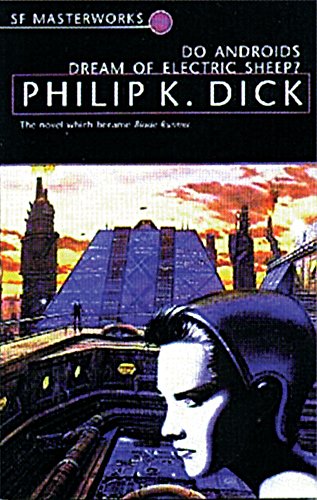
Books On Film | Do Androids Dream of Electric Sheep?

http://ibistro2.stockton.lib.ca.us/uhtbin/cgisirsi/x/0/0/57/5/3?searchdata1=64214{CKEY}&searchfield1=GENERAL^SUBJECT^GENERAL^^&user_id=WEBSERVERHere's one last adaptation for the classic science fiction lovers.

Do Androids Dream of Electric Sheep? by Philip K. Dick was published in 1968. The novel is set in a post-apocalyptic earth, most of which has been destroyed by nuclear war. Animals are prized because of their rarity and androids are used as slave workers on the planetary outposts where most humans live. 

http://ibistro2.stockton.lib.ca.us/uhtbin/cgisirsi/x/0/0/57/5/3?searchdata1=3608{CKEY}&searchfield1=GENERAL^SUBJECT^GENERAL^^&user_id=WEBSERVERIndistinguishable from humans on the outside, many androids try to escape to earth and pass as human. The novel follows a day in the life of Rick Deckard, a bounty hunter, on the hunt for escaped androids who are distinguished from humans using a polygraph-like empathy test called the Voigt-Kampf.

Ridley Scott adapted the novel into a feature film called Blade Runner in 1982. The film follows the premise of the books and keeps a lot of characters and elements in place, but diverges from the source material quite a bit. So, don't watch the film expecting. However, it's considered a scifi cult classic and was responsible for bringing Philip K. Dick's work to the attention of film studios.
Covers courtesy of LibraryThing.

Saturday, April 26, 2014

Books On Film | WonderCon 2014 Edition

WonderCon is a primarily a comic book and collectibles convention, but also includes games, books, and media. Attendees are able to attend moderated panels with industry professionals who come to discuss their upcoming projects as well as show sneak peaks. Several upcoming films promoted at WonderCon were adapted from books/comics and several were adapted into books/comics.
 
Movies

http://ibistro2.stockton.lib.ca.us/uhtbin/cgisirsi/x/0/0/57/5?searchdata1=maze runner&srchfield1=TI^TITLE^SERIES^Title Processing^title&searchoper1=&thesaurus1=SERIES&search_entries1=TI&search_type1=TITLE&special_proc1=title&library=ALL&match_on=EXACT&sort_by=-PBYR&user_id=WEBSERVER

The cast and director of The Maze Runner, schedule to be released September 2014, were present as part of the 20th Century Fox panel. The film is an adaption of James Dashner's teen novel of the same name. To see more about this book, check out one of my previous posts on upcoming 2014 YA adaptations.

http://csul.iii.com/record=b29231515~S0The writer/producer of X-Men: Days of Future Past, schedule to be released next month, was also part of the Fox panel and there to discuss the film adaption of the 1980's Days of Future Past storyline. In the comic, Kitty Pryde transfers her mind into that on her younger self in order try to prevent occurrences in the past that lead to mutants being interned in the future. The movie adaption is obviously making one huge departure by sending Wolverine in to the past and it's yet to be seen what other changes have been made.
 
The writer of science fiction thriller Edge of Tomorrow, starring Tom Cruise and scheduled to be released X,  was present discuss the his adaptation of Hiroshi Sakurazaka's 'light novel' All You Need Is Kill. The novel is set in a future earth at war with mysterious aliens called Mimics. A new military recruit with no experience ends up stuck in a time loop after being killed on his first day.


Animated Movies

http://ibistro2.stockton.lib.ca.us/uhtbin/cgisirsi/x/0/0/57/5/3?searchdata1=418046{CKEY}&searchfield1=GENERAL^SUBJECT^GENERAL^^&user_id=WEBSERVERhttp://ibistro2.stockton.lib.ca.us/uhtbin/cgisirsi/x/0/0/57/5?searchdata3=how to train your dragon&srchfield3=TI^TITLE^SERIES^Title Processing^title&searchoper3=AND&thesaurus3=SERIES&search_entries3=TI&search_type3=TITLE&special_proc3=Title Processing&library=ALL&location=J-FICTION&match_on=KEYWORD&shadow=NO&sort_by=-PBYR&user_id=WEBSERVER

There's a children's film festival and anime festival that goes on as part of WonderCon, however I did not attend either because there are too many activities and not enough time.
 
However, I did watch the Warner's Brother animated film, Son of Batman, which is schedule to be released on DVD/Blu-ray next month, which was screened in it's entirety. The film is an adaptation of the comic book Batman and Son. The comic is about Damian Wayne, son of Bruce Wayne and Tahlia al Ghul, who meets for the first time.
 
The voice actors and writer of How to Train Your Dragon 2 were also present for the XX panel to talk about the second film adaptation of the How To Train Your Dragon series. To learn more about these books please visit my previous post on the series.

Television Shows

http://ibistro2.stockton.lib.ca.us/uhtbin/cgisirsi/x/0/0/57/5/3?searchdata1=485370{CKEY}&searchfield1=GENERAL^SUBJECT^GENERAL^^&user_id=WEBSERVERhttp://csul.iii.com/record=b33773530~S0


Warner Brothers screened several episodes of their The CW shows, including this weeks episode of The 100. The 100 is an adaptation of a book of the same name by author Kass Morgan. The novel is about one hundred juvenile delinquents who are sent out by their space dwelling society to recolonize earth.
 
Falling Skies, TNT's science fiction television show produced by Steven Spielberg has been adapted into a comic of the same name by Dark Horse Comics. The series is about the survivors of an alien invaded earth and the comics take place between the seasons of the show.


Books & Comics

http://ibistro2.stockton.lib.ca.us/uhtbin/cgisirsi/x/0/0/57/5/3?searchdata1=451656{CKEY}&searchfield1=GENERAL^SUBJECT^GENERAL^^&user_id=WEBSERVERhttp://ibistro2.stockton.lib.ca.us/uhtbin/cgisirsi/x/0/0/57/5/3?searchdata1=416708{CKEY}&searchfield1=GENERAL^SUBJECT^GENERAL^^&user_id=WEBSERVER

Since WonderCon is a comic convention there were, of course, many, many comic panels, including a special Batman 75th Anniversary panel in a new Batman Beyond short was shown. Batman Beyond is a bit unique in the Batman-verse. It started as an animated series and was later adapted into a comic unlike the original Batman comics and it's spin-offs. 
 
http://csul.iii.com/record=b34760171~S0There were also panels for aspiring novel, comic book, and television writers on the writing process, publishing, and more. Sadly, I missed the 'What's Hot in Young Adult Fiction' panel which featured several young adult authors discussing trends in YA fiction. However, I was able to catch a panel with paranormal romance novelist and Marvel comic author Marjorie Liu who discussed her career change from lawyer to writer, explained the difference between comic and novel writing, and gave tips for aspiring writers.
 
Liu is known largely for her Dirk & Steele and Hunter Kiss series as well as her run on Astonishing X-Men, X-23, and Black Widow comics.

Covers courtesy of LibraryThing.

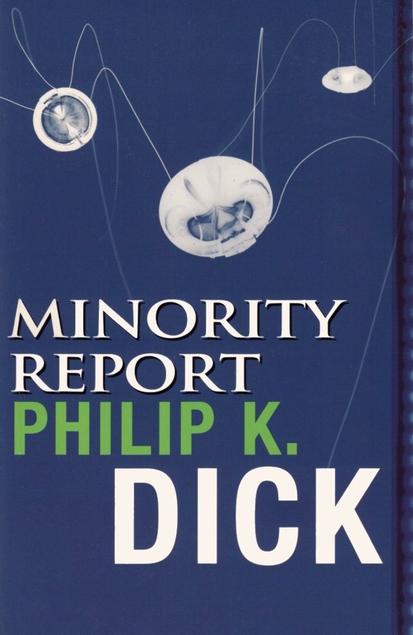
Books On Film | Minority Report

http://ibistro2.stockton.lib.ca.us/uhtbin/cgisirsi/x/0/0/57/5/3?searchdata1=317077{CKEY}&searchfield1=GENERAL^SUBJECT^GENERAL^^&user_id=WEBSERVERHere's another one for the science fiction and/or Philip K. Dick lovers.

Minority Report is a short story written in 1956. It tells of a future society where crime is prevented through the visions of three precognitive mutants. A 'Precrime' police division is set up to arrest criminals before crimes are committed. A captain in the division ends up accused of committing a future crime and goes on the run in search of his minority report (predicted alternative path).

http://ibistro2.stockton.lib.ca.us/uhtbin/cgisirsi/x/0/0/57/5/3?searchdata1=327798{CKEY}&searchfield1=GENERAL^SUBJECT^GENERAL^^&user_id=WEBSERVERIn 2002, the book was adapted into a scifi thriller of the same name by Steven Spielberg. The film starred Tom Cruise as the main character and takes quite a few liberties with the source material, including a changed ending. However, the movie is very good.

Covers courtesy of LibraryThing

Wednesday, April 23, 2014

Learning | Roses

The rosebushes in my backyard are exploding with color right now.  I love to look at them through my kitchen window, or my patio door, or from my deck. After I appreciate their beauty, I start thinking about gratitude. 

I'm glad I was raised by a mother who shared her love of roses with her children.  Every house we lived in had to have roses in the garden. She patiently taught me how to carefully trim rosebushes, to encourage more blooms.  She shared the technique of watering a rosebush at the base, to prevent wet leaves from causing the black spot disease (which was very common in Louisiana.) She had a collection of small vases, suitable for displaying single blossoms. I loved replacing the tired-looking blossoms with fresh cuttings. I can remember a few names of the varieties she grew: Peace, President Lincoln, Queen Elizabeth, Chrysler Imperial, American Beauty, and Freedom.
Peace Rose.  From T.Kiya's photostream on Flickr.com.
Some rights reserved.

I also think about how thankful I am that the previous owners of my house chose to plant so many bushes, and selected such a variety of types.  I don't know the names of all of them.  

Rose lovers (and trivia buffs, and other readers of non-fiction) will appreciate Douglas Brenner & Stephen Scanniello's A Rose by Any Name: the Little-Known Lore and Deep-Rooted History of Rose Names.


Did you know more than 15,000 varieties of roses are cultivated around the world? Brenner and Scanniello tell some interesting tales about the naming of some of them--not just the names, but what certain roses represented in times past. Which rose became a symbol for the American temperance movement? Which rose was named after a not-very-diplomatic diplomat? The answers to all of these questions, and many more, are revealed in this book.


Saturday, April 12, 2014

Books On Film | We Can Remember It For You Wholesale

http://csul.iii.com/record=b31644310~S0
One of my favorite science fiction films is Total Recall (1990), starring Arnold Schwarzenegger and Sharon Stone.  The film is based on a short-story titled We Can Remember It For You Wholesale by popular science fiction author Philip K. Dick. 

The story, originally published in The Magazine of Fantasy and Science Fiction in 1966, is a futuristic tale about Douglas Quail who wishes to visit the Mars colony. Unable to actually afford to he visits REKAL, a company specializing in implanting fake memories as a sort of virtual adventure.

Things turn dangerous for Quail when it turns out his planned fake trip to Mars as a secret agent may have actually already happened in real life.

A second adaptation of he book, Total Recall (2012), was also released starring Colin Farrell and Kate Beckinsale. Don't watch either movie expecting a page by page adaptation. Both films keep to the main premise of the short-story, but, of course, they make changes the way that movie adaptions seem to do.

http://csul.iii.com/record=b15042699~S0http://csul.iii.com/record=b35449734~S0

Covers courtesy of LibraryThing.