
I suspect only the nerdiest of us word nerds know the definition of morpheme. I happen to think it's a useful word, for anybody who ponders the meaning of words. A morpheme is the smallest part of a word that conveys meaning, without being able to be divided further. For instance, consider the word suitcase. It is made of two morphemes: suit and case. Morphemes are like the atoms of words; taking them apart further leaves you with letters, that don't particularly mean anything by themselves.
.jpg) |
| Photo courtesy of mattbuck4950's photostream on Flickr.com. Some rights reserved. |
Lately, I've thought about the multiple meanings of the word portmanteau. I am most familiar with its meaning as a literary device. A word that is made from the morphemes of other words is called a portmanteau (for example, the term bureaucrazy, to emphasize the madness of bureaucracy.) I wondered why the term portmanteau is used for this device.
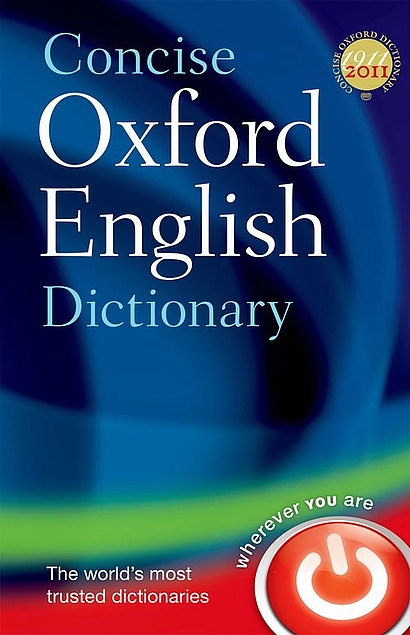 I always turn to a dictionary when I have a question like this. The Concise Oxford English dictionary is available at several of our library branches. It tells me the word portmanteau came from two French words: porter, meaning carry, plus manteau, meaning mantle.
The orginal definition of portmanteau is a big piece of luggage. As time went on, the term was applied more specifically, to a piece of luggage that opens into two equal parts.
The word portmanteau has also become a metaphor for anything that divides into two parts. (It's interesting to note that meanings can continue to expand beyond the morphemes they contain; neither porter nor manteau have anything to do with division into two parts.)
So, it appears that the "two part" concept is the reason the literary device is called a portmanteau. Whatever you call them, portmanteaus are fun. Yesterday, I laughed when my son described the last slice of cheese in our refrigerator as "provalonely."
What examples of portmanteaus have you heard? Do you have any favorites?
P.S. Since I brought up the subject of luggage in this post, I can't resist mentioning the walking luggage character in Terry Pratchett's Discworld series. This is no ordinary luggage, and I'm not even talking about its ability to walk.
The word portmanteau has also become a metaphor for anything that divides into two parts. (It's interesting to note that meanings can continue to expand beyond the morphemes they contain; neither porter nor manteau have anything to do with division into two parts.)
So, it appears that the "two part" concept is the reason the literary device is called a portmanteau. Whatever you call them, portmanteaus are fun. Yesterday, I laughed when my son described the last slice of cheese in our refrigerator as "provalonely."
What examples of portmanteaus have you heard? Do you have any favorites?
P.S. Since I brought up the subject of luggage in this post, I can't resist mentioning the walking luggage character in Terry Pratchett's Discworld series. This is no ordinary luggage, and I'm not even talking about its ability to walk.
