Showing posts with label portmanteaus. Show all posts

Wednesday, April 29, 2015

Learning | Apronym and Kibosh

I stumbled across a new word today, while I was trying to look up the origin of another word.  It all started when I used the word "kibosh" in conversation recently. You know, as in, putting the kibosh on something, to stop it. I knew what it meant, from context, but I really had no idea where it came from. So I decided to look it up. 
The Oxford English Dictionary (Cake!)

from Pete Prodoehl's photostream on Flickr.com.


I would love to have this on my birthday cake!

I looked for kibosh in the Oxford English Dictionary. The OED is considered the best source for looking up word origins, but it wasn't much help this time. It declares the origin obscure (meaning nobody knows where the word originated,) but it also mentions that it could be Yiddish or Anglo-Hebraic. 

I decided to check our electronic databases. I didn't know if they would be any help, but I thought there might be an obscure article in a scholarly journal in there somewhere. So I went to Academic Search Premiere, and typed in "kibosh."  

That brought up too many news articles with headlines talking about putting the kibosh on things. 

I narrowed my results to scholarly journals. That cleared things up; instead of 66 articles, I had four. One of those four had a word in the title that I had never heard before: apronym. (The word kibosh was also in the article, as part of an apronym for BLOCKAGE; the article was not about the origin of kibosh.) 


Shoemaker in apron, holding his tools. (Cropped.)
from George Eastman House's photostream on Flickr.com.
No known copyright issues.
Never mind kibosh! 

I had to know more about apronym and its meaning. The word I accidentally found has nothing to do with the names of aprons. 

Apronym is a relatively new word; it is a portmanteau of the words a propos and acronym. (For a discussion of portmanteaus, just click on the above link to my 2013 post about them.)

Here's a link to the article where I found the word apronym. It gives some fun examples of apronyms, in which are acronyms that form a real word, with the words that form the acronym relating to the meaning of the word. For example, Seasonal Affective Disorder has an apronym of SAD. It might help to think of apronyms as plays on words, like puns.

Wednesday, November 5, 2014

Learning | Happenstance and Q

Happenstance is only about 120 years old or so, which is not terribly old, as English words go.  I don't hear it used very often, but I've always liked the word. 

Happenstance is a portmanteau of the words happen and circumstance.

Recently, I was searching for pictures on Flickr.com, using the search term words. Happenstance brought me to this photograph of a page from a Finnish dictionary, showing all of the words beginning with the letter Q.


All the words beginning with Q in the Finnish dictionary, from hugovk's photostream on Flickr.com. Some rights reserved.


I love this picture, because I learned a few things from it:  


  • I'm not familiar with the Finnish language at all, so I was intrigued to see that so few words begin with the letter Q. Q is not a very common letter in English, but we have many more Q words than the Finnish.
  • I nearly knew what all five of those Finnish Q words meant! Three of them were place names, that are spelled the same way as they are in English.  
  • I knew Quisling meant traitor who collaborates with an enemy force occupying their own country, from studying history during the World War II era. 
  • I had an idea what QWERTY-näppäimistö meant, because the letters QWERTY are the first five letters on most computer keyboards.  In fact, we usually call that type of keyboard a QWERTY keyboard.  So I went to Google Translate, and pasted in the word QWERTY-näppäimistö. Just as I suspected, it means qwerty keyboard. If you would like to hear how to pronounce the word, just copy and paste it into the Google Translate window.
  • Looking at this picture made me think about the Finnish language. I'm quite unfamiliar with the language. I never see people asking for, or checking out books about, the Finnish Language.  So I went to our shiny new library catalog and found a few. There are two different Finnish-English,English-Finnish dictionaries at Cesar Chavez Central Library. Chavez also has a Finnish Reader, in the government documents section of the Storage Area downstairs. It's from 1968!

Wednesday, June 19, 2013

Learning | Portmanteaus and Morphemes

I suspect only the nerdiest of us word nerds know the definition of morpheme. I happen to think it's a useful word, for anybody who ponders the meaning of words. A morpheme is the smallest part of a word that conveys meaning, without being able to be divided further. For instance, consider the word suitcase. It is made of two morphemes: suit and case. Morphemes are like the atoms of words; taking them apart further leaves you with letters, that don't particularly mean anything by themselves.

Photo courtesy of mattbuck4950's photostream on Flickr.com. Some rights reserved.


Lately, I've thought about the multiple meanings of the word portmanteau.  I am most familiar with its meaning as a literary device.  A word that is made from the morphemes of other words is called a portmanteau (for example, the term bureaucrazy, to emphasize the madness of bureaucracy.) I wondered why the term portmanteau is used for this device.

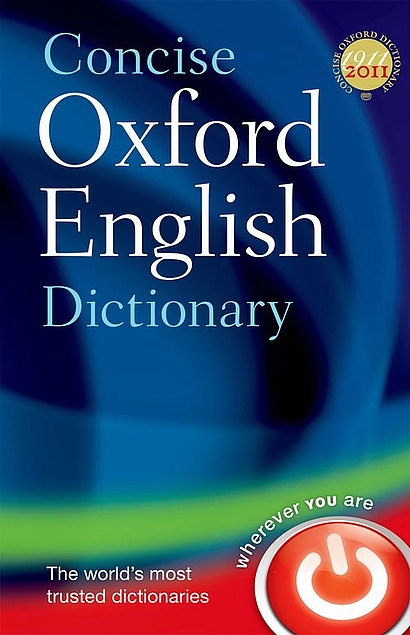
I always turn to a dictionary when I have a question like this. The Concise Oxford English dictionary is available at several of our library branches.  It tells me the word portmanteau came from two French words: porter, meaning carry, plus manteau, meaning mantle.

The orginal definition of portmanteau is a big piece of luggage. As time went on, the term was applied more specifically, to a piece of luggage that opens into two equal parts. 

The word portmanteau  has also become a metaphor for anything that divides into two parts. (It's interesting to note that meanings can continue to expand beyond the morphemes they contain; neither porter nor manteau have anything to do with division into two parts.)

So, it appears that the "two part" concept is the reason the literary device is called a portmanteau.  Whatever you call them, portmanteaus are fun. Yesterday, I laughed when my son described the last slice of cheese in our refrigerator as "provalonely."

What examples of portmanteaus have you heard?  Do you have any favorites? 

P.S.  Since I brought up the subject of luggage in this post, I can't resist mentioning the walking luggage character in Terry Pratchett's Discworld series. This is no ordinary luggage, and I'm not even talking about its ability to walk.