Showing posts with label short attention span challenge. Show all posts

Friday, March 7, 2014

The Reader Digests | Blogging, Take Three!

Alrighty, I'm not going to beat around the bush here.  It has been a long time since I have blogged.  I actually forgot how to log on to our blogging site.  That is how much time it has been!  

So let's review my blogging fails...

First, I tried the Short Attention Span Challenge and I couldn't keep it up. It was too, well, challenging.  But truthfully, it's because I went back to school (after this post) and I just couldn't do all those projects combined with working full-time, parenting my kids, and grad school every week. 

Then, I tried Miss Moneypennypincher's money-saving blog.  Here's the deal, I ran out of money-saving ideas.  I guess if I was Suze Orman or Dave Ramsey, I would have more than a blog at ssjcpl.com (not that there is anything wrong with that, mind you!).
If you won't, then I will!

Now (and hopefully forever-ish), I am undertaking a whole new blog!  And here is the premise:

Do I eat food? Yes.
Do I like food? Yes.
Can I talk endlessly about food? Yes!

Sounds like an obvious "blogging win" to me!
My new blog is The Reader Digests! Yum!!!

Every  Friday at 2 p.m. 

Wednesday, October 9, 2013

Learning | Amy Stewart's Non-Fiction


I love getting book recommendations from customers.  

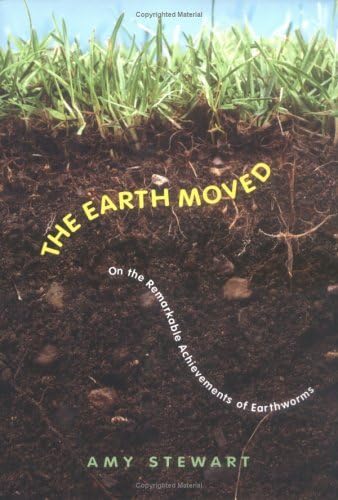
One lady, Donna, always seems to be reading things that look interesting to me. We often talk about the mystery books we like.  Recently, she checked out a book that was not a mystery: Amy Stewart's The Earth Moved: the Remarkable Achievements of Earthworms. I admired the cover, and mentioned that I had always wanted to learn more about earthworms. (Seriously, who has not wondered why they come out of the ground when it rains? I always feel sorry for the ones who stay on the sidewalk and die.  And what's the difference between an earthworm and a nightcrawler?) I checked out the e-book version.


Donna encouraged me to look for other books by Amy Stewart, too. It turns out that Stewart specializes in writing non-fiction books. 


Reviews of Stewart's work tend to use adjectives like "witty" or "quirky." She wrote her first book after she moved from Texas to Santa Cruz, California. She always dreamed of having a garden. So she set about transforming her tiny 1200 square foot yard into one. She researched the subject of gardening by doing it (not unlike my fellow blogger, Tara, in her Short Attention Span Challenge.) 


Stewart shared her personal experiences, and lore she discovered along the way. I love the quotes she included from old gardening books. I also enjoyed hearing how others shared heirloom seeds with her, especially the story about the little tomato her grandmother sent in the mail. Then there was the time she hired some men to dig in her yard and amend the soil; after she explained what needed to be done, she grabbed her gloves and shovel, and proceeded to work alongside them, all day long. All of that work resulted in From the Ground Up: the Story of a First Garden.


Glancing over the list of Stewart's titles, I realize they all are somehow related to gardens and pests, botany and bugs.  She has an eye for interesting facts about plants and insects. From the Ground Up and Flower Confidential: the Good, the Bad and the Beautiful in the Business of Flowers have chapters which should be read in order because of their logical progression.  As mentioned above, the first book is her own story, so it is written as a first-person narrative.  

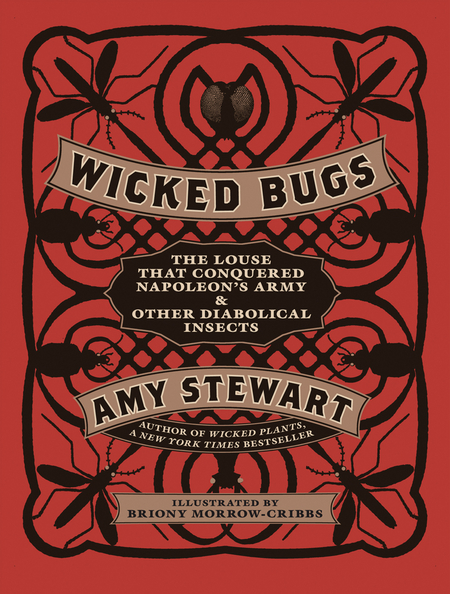
The other books are equally interesting, and the chapters are organized in a logical heirarchy, but reading the chapters in random order would be no problem. These are the kinds of books I like to read in a doctor's waiting room, or an airport. Here's a sample from Wicked Bugs,  on page 94, under the "Destructive" section, in an entry called "The Gardener's Dirty Dozen:" "They may not change the course of civilization. They might not spread the plague or send villagers fleeing for the hills. And they've probably never been implicated in a murder--although they do inspire murderous rages. These are just some of the pests that drive gardeners mad."  

I, for one, am glad Amy Stewart is able to share her interests so eloquently.


Friday, June 28, 2013

Short Attention Span Challenge | Knotty Knotty!

Why Knot?  As I looked at the library book, Why Knot?, which inspired this week's blog post, I thought the same thing.  Why should I learn how to knot?  I remember briefly learning knots when I was at camp and trying to earn some sort of generic badge, although I couldn't recall how to tie any of the knots now.  I am not a fisherman or a sailor.  I am fairly sure I invented a new knot when I used two hairbands and a ribbon to straighten up my Christmas tree last year. However, according to Philippe Petit (You might have heard of him, the tightrope walker who illegally walked between the World Trade Center's Twin Towers in 1974.), there are many practical uses for knowing specific knots.  Such as, securing items in travel.  So wait, me just tying random twists and pulling the rope into strange convolutions is not the best way to tie that IKEA stuff onto the top of my car?  Who knew?  Another use, he says: rescuing people!  Yeah, I guess that's pretty important.  But the best use (although I'm not sure why this is more important than saving lives), says Petit, is making connections!  Linking pieces of land, creating bridges, and connecting people.  Okay, so knots are pretty important.  In fact, upon reading that, I remembered a  documentary I saw a few years ago about a region in China where people cross a river everyday by sliding across a rope.  So, they probably think effective knots are pretty nice too.

The Challenge:
Learn some useful knots.  I used the book referenced above, which includes a little rope to use while practicing your knots. You can check out the book and the rope at the library, but remember to bring BOTH back!

The Process:
Petit says a good knot has 4 virtues:
1.  It is easy to tie.
2.  It is stable under a load.
3.  It does not reduce the ultimate breaking strength of the rope.
4.  It is easy to untie.

Also it keeps it's shape.  Wait that is five things!  I'm still not sure why there weren't 5 virtues...

And he isn't the only one who thinks knots are important.  In 1933, Clifford Ashley wrote a book with over 7000 drawings and featured 3,854 knots!  I wonder if my double hairband ribbon knot is somewhere in there.  I bet knot! yucka yucka...

The same year, the International Guild of Knot Tyers (IGKT) was established. "Tyer" is intentional; the use of "tier" is ambiguous, they say. 

The IGKT has something called the Six Knot Challenge, where participants must tie six knots as quickly as possible.    The world record is 8.1 seconds.  I will not beat this record, I assure you, but as I am typing this it is 12:58 p.m. on Friday.  My blog is set to run at 2 p.m., so I am giving myself an entire hour.  I know, it is astonishingly fast. To make this more impressive, I will attempt this feat while working on the reference desk (which means I will be happily interrupted several times, for sure).

Sheet Bend Knot
The Result:

The Sheet Bend Knot (Common Bend, Ordinary Bend, Single Bend, Flag Bend, Swab Hitch, and the Barbers' Knot)
Use: This knot has many uses, such as fishing nets.  It can also be doubled and used to tie sheets together and escape out of a window!  Good to know in case I am kidnapped and placed somewhere with excess bedding.

It is now 1:12 p.m....

The Square Knot (Reef Knot, True Knot, Hard Knot, String Tie Knot, Common Knot, Regular Knot, Ordinary Knot, Flat Knot, Hercules Knot)
Use: Close a sack, tie a package, secure a roll, tie scarves, reef or furl sails on a boat.  Petit mentions that there is a Reef Knot in Arizona 9000 years old!  Also, in Ancient Greece brides tied these knots on their belts, and it was supposed to make them fertile.

1:22 p.m....
Square Knot
Round Turn and Two Half Hitches

The Round Turn and Two Half Hitches
Use: to tie something to another object like a pole or mast.  It will not slip up and down on the object it is tied to.
1:36 p.m.


The Bowline (pronounced Bo-lynn or boo-lynn. Like Anne?)
You can tie this knot around yourself if you are about to fall down a cliff.  I'm not sure I ever quite got it right, so I think I'm doomed.

1:53 p.m....
My unsuccessful Bowline

Sheepshank (Dogshank, Catshank)
Use: To repair a damaged rope or shorten a rope.  Petit suggests using the loops to hang stuff when camping.

Sheepshank
1:59 p.m...

Clove Hitch
(Builder's Hitch, Boatman's Hitch, Peg Knot, Double Half Hitch, Steamboat Hitch)
Use: Attach a rope to a post (or water bottle) super fast.

2:03 p.m.!  On no!!!!  In my defense, in this last hour I signed about 20 people up for our summer reading program, Reading is so Delicious! It has my stomach tied up in knots!  Have you signed up yet???
Clove Hitch

Friday, April 12, 2013

Short Attention Span Challenge | The Graphologist

Imagine you are on the perfect date.  Your date is charming, they are fun to be with, but then when they write their name on the check you realize something...they are probably an ax murderer and you should run.  Like right now, RUN!!!  No, I'm joking, don't run.  Just keep reading my blog.  Seriously though, you can tell a lot about people from their handwriting.  I have always been fascinated by those experts who show up on the news to tell us some unknown fact about someone famous based on how they sign their name or write a note.  It is a practice with a long history, believe it or not.  In fact, according to one of my books, in 330 BC, Aristotle said, "Handwriting is the visible form of speech".  Wow that was a long time ago.  The actual practice of graphology began in France, and was developed by a French monk named Jean Hippolyte Michon in the early 19th Century.  He created a system to analyze handwriting called the study of fixed signs.  After that, more research was done and methods were created in the practice of graphology until "Voila!", the analysis of handwriting that we practice today was created.

Sample 1- Impulsive variety sampler?
The Challenge
This week, I wanted to master (well as much as I can in a week) Handwriting Analysis, or Graphology.

The Process
To start, I asked for handwriting samples from staff around the library.  I asked them to send their samples anonymously and I threw out anything that I recognized.  After doing this, I found out the best handwriting samples are on unlined paper (I asked for lines), contain the word "I" (which says a lot), and were not anoymous.  Oops, I did none of those things.  Oh well, carry on!

This week was mostly a lot of reading and researching.  Honestly, I know I didn't master nearly all of the things you need to know to analyze someone's handwriting, but I did get a few good pointers on how to make a quick assessment.  However, a few things probably aren't enough to get a real analysis.  It takes a good combination of elements from a handwriting sample to get a complete picture of who someone really is.

Sample 2 - Tired, logical worrywart?
So based on the first half of two of the handwriting analysis books I used (which really tells you what an expert I have become, doesn't it? So please don't get mad at my horrible analysis of your sample), here is some helpful information:

Line spacing is the amount of space left between one line and the next.  It indicates mental clarity.  It shows how you plan, your perspective, whether you can be objective, closed minded, or irrational.
Sample 1 is a good example of crowded line spacing,  Do you see how the "g" in the word "everything" crowds over the word on the next line?  According to graphology, it means that the person who wrote this lives in the moment, and is driven by impulse.  They don't think about how their big "g" loop is going to leave them no space for the word underneath later.

Sample 3 A reserved serious person who wants to move forward
On the other hand, sample 2 leaves wide spacing between each line.  In fact, they make sure to skip a line in order to avoid hitting the next one.  This could mean a few things.  They are very logical, organized and have great mental clarity or it might mean they are too concerned about maintaining their own space and enjoy observing rather than participating.  Since I work with whoever sent this in, I am leaning toward the logical and organized analysis.  They are definitely not antisocial at all, no way.

Word spacing is the distance between words and indicates how much personal space the writer demands from others and the level of restrain in social situations.  In sample 6, the person demonstrates irregular word spacing.  This indicates that their behavior changes unpredictably in relation to others and that they cannot sit still - especially since they also have low loops, such as in the word "go."  Since they demonstrate crowded line spacing in addition, they are probably someone who talks quickly, does not think ahead, and lives in the moment.
In sample #3, the person uses wider word spacing and they are probably someone who is reserved and keeps their distance from others.

Letter Spacing is the distance between letters and gives clues to the degree of freedom allows, or whether they are able to adapt and change their mind when needed.

Sample 4  Trusting, smart, social, debater who doesn't like to plan?
Sample 5 and 6 show narrow letter spacing.  It means that they could be likely to give in to emotional and peer pressure.  They might also be someone who rushes to judgement.

Margins show a writers feelings about the past and future.  The left margin signifies the past, the right signifies the future. Margins reveal how you perceive and balance your time.

Samples #1 and #6 feature an irregular right margin.  They might not be very good at planning for the future.

Sample 4 has a rigid left margin, which indicates discipline.  

Sample 5 features an expanding left margin (a slow starter) and an expanding right margin (and so does 3), showing someone who will move to the future, but needs encouragement.

Sample 4 has a wide right margin, which might mean that they are interested in doing things, but not necessarily planning things.

Sample 5 is a slow starter, but gets really enthusiastic eventually!
The Baseline is the invisible or printed line on which the handwriting rests.  You can see the baseline by using a ruler or straight edge.  The baseline is an indicator of goals.  The steadier the baseline, the more focused someone will be at achieving the goals.  It could also be a symbol of optimism or struggle.  For example, in sample 3, the baseline moves up, which could mean the person is optimistic, or it could mean they are struggling against something.

Sample 2 has a downward baseline which indicates worry.  I'm still not sure why it wouldn't indicate that someone was having an easy go of something - since if it goes up it could mean difficulty.

The Result
Clearly I am not very good at this, even after a week of trying.  I think this is a skill that would take YEARS of research to really master.  I didn't even get into zones (where your letters fall), size, or any other indicators.  Still, even though I am horrible at handwriting analysis, it sure is fun! Coworkers who donated your samples, I hope you aren't mad at me!!!! I am sure I did this all wrong.  Oh, and sample 6 was me, in case you were wondering...but let's not tell my husband that, okay?
6. Someone with a short attention span who is impulsive, irrational, and conflicted.  Yeah, right.

Friday, April 5, 2013

Short Attention Span Challenge | The Number Cruncher

Well, this week has been another challenging week as far as my schedule goes.  On top of this blog, my kids, my full time job, and all of life's general ups and downs, I have been preparing to take the GRE Standardized Test as well.  Actually, I have been off and on semi-preparing for the test for years!  There are two issues I have with this test.  First, I have been too scared to pay for it ($185) until I was confident I would score well.  Second, I have never been confident I would do well because it has been twelve, yes, TWELVE years since I took any sort of math class.  Wow, typing it out just made me feel a whole lot older.  When I started college, I took Statistics right away (and got an A, might I add). My math requirement was done and I spent the rest of my college career focusing on English/Written Communications.  So, imagine my horror when I took a practice test for the GRE and many of the questions were Algebra, Geometry, Statistics (and maybe even some Trigonometry---I don't even know anymore!).  This stuff wasn't hard for me when I was actually in school doing it on a daily basis, but now it is what nightmares are made of. 
http://media-cache-ec3.pinterest.com/originals/91/1d/30/911d30acfde28187ef0b62291c0fa73a.jpg
The Challenge
Relearn advanced math skills.

The Process
I started out by checking out a bunch of the library's GRE test prep books.  We have other test prep books as well from SAT, ASVAB, LSAT, TOEFL, AP, to career and civil service test booklets. They were great, and very helpful in some ways, but clearly, whoever wrote these books assumed that the person reading them remembered anything about advanced algebra.  I am not that person.  In fact, reading these books made me even more frightened than I was when I started.

I thought about doing a lot of things; including taking a class, hiring a tutor, paying an exorbitant amount for some online GRE prep courses.  However, I realized, "Why am I stressing out about this so much?". Every week, I find a skill, check out a book, and learn it.  Does college level algebra have to be any different?  NO!  So, I walked over to the 510-519 section of the library and grabbed some books.  I started at the beginning, checking order of operations, solving for x and y, factoring, simplifying, and lo and behold, it slowly started coming back to me.  Our books reminded me of being in school again - starting simple, doing the problems, and working my way up to the harder stuff.  I covered my desk with scratch paper and did each and every problem from beginning to end until I felt confident at what I was doing.  I did algebra while cooking my kids dinner. I studied geometry after everyone went to bed.  I did word problems while eating breakfast.  I have spent nearly every waking minute relearning these skills. One night, I had a dream about being in my middle school Algebra class.  Even my unconscious was studying!

The Result
I am still going through the books, but thanks to the library, I finally feel confident.  After years of putting it off...

I am scheduled to take the GRE on April 29!  Wish me luck!!!

Blog hint---Someone asked me if I link the books I use for my blog.  The answer: Yes! Always!!!  Just click on the blue words above to go to either the books I used or the library catalog search term to find them.  

By the way, next week I will write about GRAPHOLOGY, or HANDWRITING ANALYSIS!  I have anonymous handwriting samples from library staff!  It should be fun! 

Friday, March 29, 2013

Short Attention Span Challenge | The Seedling Starter


From Escalon to Thornton, Tracy to Linden, the Central Valley knows how to do many things well, but one thing in particular stands out to me: farming.  It cracks me up when driving down country roads I see tourists stop to take pictures near a grapevine or an almond orchard.  I guess because I grew up here I didn't really think a grape vine or an almond tree was a big deal.  The funny thing, as I have said in previous posts, is that I in no way have a green thumb.  Starting a plant from seed has been fairly impossible for me, but the farmers around here do it every year!  It really is a miracle, and maybe one I take a little bit for granted.  Whether my children decide to stay here in the Valley or move on to - dare I say it - greener pastures (though I doubt they will find any), I want my kids to understand and appreciate that they come from a region that supplies food to the entire world. We really are a small miracle!  According to this 2011 report, two-thirds of the landscape in the Delta Region consists of agriculture.  In our county's Delta region, there are nearly 215,000 acres of farmland, producing a farm gate value of approximately $558 million!  That's a lot of food!

We don't usually keep library books on the grass!
The Challenge
Show my kid how to plant a seedling the right way.  Hopefully it will be successful this time!

The Process
I will be up front with you here.  This challenge was not difficult.  However, it is a skill (and it let me spend some much needed quality time with my little one).  So, I hope you will forgive me that this blog isn't as exciting as usual (Assuming you think my blogs are interesting.  If you think they are hum-drum, and still reading them every week, then you are probably related to me---Hi Mom!).

As I mentioned in this post, part of my trouble had been that I didn't have a cold frame.  Since that issue is solved, I needed to figure out my other challenge, getting the seeds to grow.  According to both books I checked out (this one and this one), in order to germinate seeds, you can start with a plastic tray, milk containers, foam cups, a small pot, or a cardboard container and fill it with compost, peat pellets or seed starting mix.  I went to my local nursery and asked them if they ever gave away extra plastic trays that the plants are sold in.  They said yes!  So my seed starting container was free (this might be the most excited I have ever been over plastic containers).  Even though I am not supposed to get advice, the nurseryman told me to wash out the containers with a little bleach to sanitize them, since I would be using them for seeds.
Next, I purchased the seeds at our local hardware store.  There are a few ways to figure out what seeds to start with.  On the back of the seed container, there is usually a planting schedule for each particular zone.  There are two zone maps, the USDA Plant Hardiness Map, or the American Horticulture Society Plant Heat Zone Map.
AHS Heat Zone Map - Zone 8 or 9

The seeds I purchased and planted:
  • Tomatoes
  • Basil
  • Beets (which are out of season, even though the package said otherwise-oops!)
  • Carrots
  • Cucumbers
  • Yellow Squash

  • Jalapeno Peppers
One of the books suggested I mix the planting mix with water in a bucket before planting, which I had never done before.  I used a large bucket.  I poured the water and my daughter mixed.  It was quite fun for her, I think!  One thing to note is that the soil should not be soggy, but just moist.  It would have helped if I had noticed that part before I turned on the hose.
Look at those fancy gardening shoes!

MUD!!!!
After that, we put the mix into the plastic containers.  Then, we stuck our fingers or shovel in to make a little hole, and placed in the seeds. We covered the hole with 1/4 to 1/2 inch of soil/compost.  After that, we put the seed tray in the cold frame we made a few weeks ago.

The Result
I don't know yet!  I will update this post when I see some or a lack of seedlings, start to sprout.  In the meantime, check out one of SSJCPL's gardening books and plant something!  
P.S. Did you notice my blog has moved to Fridays at 2 p.m.?

    Wednesday, March 13, 2013

    Short Attention Span Challenge | The Coupon Queen

    Like many others, my family has dealt with our share of budget cuts and economic set backs.  In some ways, it has made things more difficult for us, but in others it has been a sort of blessing.  I have found ways to cut our expenses that I didn't even know existed and learned how remove things from our budget that my family wouldn't even notice was gone (although the "no cable" experiment was a complete bust). However, there was always one skill I knew in the back of my mind would probably help me, but I never really could bring myself to try.  Couponing.  I have heard couponing is a great way to save some money, but...

    1.  Couponing takes time.
    2.  You can't be shy if you want to coupon.

    Believe it or not, I don't have time (although maybe when I am done writing these blogs posts every week, I will), but I am also pretty shy.  I can strike up a conversation easily enough and do my fair share of socializing but when it comes down to it, I embarrass easily.  I hate the thought of inconveniencing people, including strangers in a checkout line or people working in a store.

    That can happen when you coupon.  Does it mean it is wrong?  No way!  Can it feel a little awkward?  Well, for me, yeah.
    http://www.mommysavers.com/wp-content/uploads/2011/04/extreme-couponing-1024x585.jpg
    Extreme Couponing on The Learning Channel

    The Challenge
    Find and get some amazing coupon deals---like "buy in bulk, I just bought this for free" type of deals! EXTREME couponing!

    The Process
    Even though my rule is no online sources, for this challenge I was forced to go online.  However, I did use books to learn the basics, but in order to find the weekly savings, I had to use certain websites.  Another thing to note is that although I only did this challenge for one week, I had been saving coupon books for about a month or more.  This is part of couponing that is a challenge for some people.  In order to get many of the coupons, you have to have a newspaper subscription or know someone who does.  If you didn't already subscribe to a newspaper and you are doing so just to get coupons, you need to subtract that from part of the money you are saving. 
    There are several different types of coupons.  There are the manufacturer inserts that come in the newspaper (SmartSource, Red Plum, Proctor and Gamble), as well as the store inserts and coupons.  There are also printable coupons that are available online from sites such as www.coupons.com.  Smart phones can also be used to access coupons, but I think I am the only person in their 30s to not have one.
    On their own, most of these coupons are not worth much. You can find $1 or so here and there, but the real savings comes from stacking.  Stacking is using store discounts, combined with manufacturer's coupons, combined with store specific coupons to create a sizable savings.

    This is where it gets a little tricky.  Couponers must be aware of store policies in order to use their coupons effectively.  For example, Costco does not accept manufacturer's coupons (but they do send out their own coupon book once a month). They also need to know who has the deals.

    My challenge was figuring out how to use the coupons together to create an amazing deal.  I have seen those shows where Couponers go out and fill up their carts with goods, and once they are through getting everything rung up their total is $0.  I want to do that!

    Here are the steps I took:
    • Collect coupons- See above
    • Organize - Some books suggested taking the coupons out and putting them in binders, by date or type.  Other suggested using a shoebox with dividers.  I tried the shoebox but it wasn't working for me, and took too much time, so  I just put mine in piles.  I had a pile of SmartSource Books, a pile of Red Plum books, a Proctor and Gamble book, and a pile of store books.  
    • Find -  Use the internet to find weekly deals at particular stores.  I used www.couponmom.com and www.moneysavingmom.com.  Here, I looked up the different stores I was interested in and found items that I would like to buy.  I tried to pick stores that I already shopped at and stores that were not far out of my way.  So, I scratched out Walmart, because I don't really shop there.  Also, even though there were lots of items that could have been free after  the coupons, I skipped things I did not need.  However, I would like to suggest that if you are interested in couponing, and there is something that you think you don't need, but you can donate, this is a great way to help our local homeless shelters and charities.  If you see a deal where you can get free soap, diapers, or toilet paper, go for it! Here is a list of things the Stockton Shelter can use.
    • Clip - Take out the coupons you will use and organize them by stores.  For example, I found some deals at Walgreens. I cut out the coupons I needed, paper clipped them together, then wrote down the deals I was looking for on a Post-it and stuck it on top.  
    The Result
    I had two very different, but interesting coupon experiences.
    • Walgreens - There was a buy one get one (BOGO) 1/2 off deal on many Almay products at Walgreens.  I had two coupons I could use for Almay products.  One was a $2 off/1 item Walgreens coupon, the other was a $5 off/2 items printable coupon.  Walgreens accepts a manufacturer's coupon combined with their store coupons and the $2 coupon could be used twice, taking $4 off total..  According to one of my websites, I could get a makeup remover for free.  Two with BOGO 1/2 off deal = $8.99-$5 printable coupon =$3.99-$4 Walgreens coupon=$0.There was only one problem!  By the time I got there, there was nothing left!  The nice saleslady (at the Ripon location)  even went through some of the inventory boxes for me, to no avail.  So instead, I found another Almay product I could get a good deal on, eyeliner.  Here's how the deal worked.  Originally, they were $7.50 each.  With a BOGO 1/2 off 2 eyeliners came to  $11.25-$4 Walgreen's coupon = $7.25-$5 Man. coupon=$2.25 total.  So, I got $15 worth of makeup for $2.25.  
    My experience at Walgreens was great.  I told the lady who helped me that I was writing a blog and she made sure that I understood how all my discounts (I got a few other things too) worked so I could explain it to you!  I asked her if she ever got annoyed with people coming in with coupons and she said, "NO! Not at all. We have people come in with binders full of coupons, and I say 'Good for them!". 

    • Target - There were two deals I was looking for at this store. The first was a deal on 34 count Bounce Dryer sheets ($1.97 regular), where after using a $3 off 3 manu coupon and a $3 off 3 Target coupon would end up being $0.  Once again, when I got to the store, there were none left on the shelf.  I found a store associate walking around nearby and asked her if they had any in the back.  No luck.  The second deal at Target was a deal on Neutrogena bar soap.  Regular price on these items is $1.97, and with a $5 off/2 items it would make them $0.  According to Target's coupon policies, they are free to lower the discount of a manu coupon, and will not give money back.  I thought this would have been a great item to give to the homeless shelter.  When I got up to the register with my coupon and two bars of soap, the lady at the register said the coupon was not possible because the total was less than $0.  I politely asked her if she was sure and she turned on her blinky light thing above the register and loudly yelled, "MANAGER!!!  I NEED A MANAGER!!!".  When the manager walked over, the associate held up the coupon and said "Coupon!" in a no-so-nice tone.  The manager looked at the coupon and said "The picture has a big item on it, this is too small."  Already completely embarrassed, I told her I would look for something larger.  As I was walking back to the soap aisle, I looked at the coupon and nowhere did it say that the item should be a certain size or price.  I ended up grabbing 2 hand lotions (priced at about $3.50 each) for around $2.30 total with tax instead. At that point I just wanted to leave.
    So, using coupons at Target was pretty much my worst nightmare.  Exactly what I didn't want to happen did.

    Will I coupon again?  Maybe, if there is something I need and it is easy or an exceptionally good deal.  Would I count on couponing as a way to cut our budget, probably not.  On top of raising two young kids with a full time job, I do not have time to coupon regularly.
    How about you?  Have you ever tried extreme couponing?  I would love to hear about your experiences!

    Wednesday, March 6, 2013

    Short Attention Span Challenge | Plants vs. Zombies

    I was listening to the radio recently and they were talking about "survival packs" for a zombie apocalypse type of emergency.  One of their suggestions was to save packets of seeds, in case at any point there was a shortage of food.  "Wow! what a great idea," I thought to myself, until I remembered two things: one, I am a terrible gardener and two, other than put them in the ground and water them (which to me seems simple enough), I do not really know how to start seeds.  If I was depending on seeds, I wouldn't make it very long, at least in human form.  Zombies don't eat veggies.

    Even though I know basically nothing about gardening, every year I at least try and start a seedling.  Although, I never actually took the time to research how to properly do this.  One year,  I planted seedlings in plastic cups.  The cups cracked in the sun, and didn't drain, and nothing grew.  Plus, we carted them from our playroom to the yard every once in a while daily, but that was a hassle.  The next year, my daughter and I planted seeds in little biodegradable cups that you can plant directly into the garden once they sprout.  We carted them in and out almost everyday, but this time, the birds came down and picked at the little cups, upending all the seedlings and taking the cups away for their nests.  I discovered I was starting them all wrong.  Seedlings do not have to be indoors.  If you do not have a greenhouse, you can create something called a "cold frame".  It protects seedlings and starter plants from the frost, wind, birds, and allows them to get sunlight in the daytime.

    The Challenge
    Create a cold frame. 

    The Process
    Cold frames are relatively easy to create.  Simply put, a cold frame is a box with hard opaque sides and a clear lid.  The box can be made from many different types of materials.  Some books I read suggested making one out of hay bales and covering the top with an old window frame.  Other books suggested taking plywood, creating a box and covering it with plastic sheeting.  The idea is to create a warm place for seedlings, by capturing enough sunlight in the daytime to warm the box and the soil.  The cover should be something that can be easily opened or modified.  The box needs to remain at approximately 70 degrees F, so if the temperature rises above that during the day, the lid should be cracked open or pulled back a bit.

    We had a bunch of old 2x4s laying around, so I decided to use those to make my cold frame.  I also had an old IKEA changing table, so I used the wood from that as well.  Since I have small children, I decided to use a clear acrylic plastic for the lid.   I was concerned plastic wrap would be a choke hazard, and glass would get broken.  I purchased a 2'x4' piece of plastic at the hardware store for about $25.  Many of my books suggested making a box with a hinge attached, but I thought that would be hard to create, and I also didn't want my kids to get their fingers or bodies smashed under the lid.  Instead, I decided to make a way to slide the door open.

    The box does not need to have a bottom.  In fact, some people put them directly into the garden and grow seedlings in the ground beneath the box.  I don't have much empty garden space, so I made my frame portable, and I will plant seeds in clay pots.  When the frame is not in use I can put it up on its side against the fence behind our metal shed.

    Look at the awesome drill!


    I used the 2x4s to create 3 rectangular frames that would fit around the plastic.  Using a saw (which I kept calling a "drill", thoroughly confusing my husband) I cut six 51", boards and six 25" boards.  Lengthwise, I cut about 1/4 off one the 25" boards.  I drilled screws (with an actual drill) into the boards to make the 3  rectangular shaped frames.  Then, I placed the frames on top of each other.  The frame with the board cut lengthwise went on top, with the gap facing up.  I secured the frames together by using little pieces of the changing table.  I drilled two long pieces of the changing table level with the bottom of the gap, on the inside of the frame.  After securing the frame, I slid the plastic piece over the gap and rested it on the long pieces of the old changing table (they are the pink wood in the box).  The plastic slides back and forth for easy opening.  
    The Result
    I know it isn't the cutest cold frame in existence, but it is functional!  When I have more time, I plan on painting the inside white to reflect more sunlight onto the plants and soil.  Another fun project would be to ask my little one to help me decorate the outside of the box using paint. 


    In retrospect, it might have been better to create a gap on either side of the box, so that the plastic could be cut in half and slide out in smaller pieces.  Right now, when the box is half open, the plastic sticks out pretty far.

    Ditz alert: In order to get the screws into the boards, I had to drill a guide hole into the frame first.  I was cursing at the drill and how annoying it was to take the hole maker (I don't know what the name is for this, obviously) off and then put the other drill bit on to insert the screws.  I did this over and over, for every board.  Then I realized I could just make the holes on ALL the boards at once, then go back and drill in the screws.  Duh.

    Wednesday, February 27, 2013

    Short Attention Span Challenge | The Temper Tamer


    Temper tantrums are no fun.  They are no fun for the people having them.  They are no fun for the people dealing with them.  They are no fun for the people watching them.

    This week, I had planned on tackling a skill that I run into often: dealing with a child's temper tantrum.  As I started my research, I kept running into the same issue: children with recurring temper tantrums and anger issues often learn their behavior from adults.  Okay, I get it.  So "anger begets anger".  Parents set the example for the children.  
    First off, before we get too into this, temper tantrums in preschoolers are normal.  Most kids will have one from time to time.  It isn't because they are undisciplined or hostile, but because they are not mature enough to know how to properly express and define their anger.  However, a grouchy parent doesn't help.  I try and do my best as a parent and as a person in general, but on occasion, I am tested.  I have been known in the past to get a bit upset when something throws me for a loop.  I envy the guy on the Subaru commercial who walks out and sees his kids washing his open car (including scrubbing the vents with toothpaste), stops a moment, and says, "Hey, you missed a spot".  Granted, those kids probably shouldn't have been washing that car with the windows open, but flying off the handle (as most people probably would have done) wouldn't have taught them much.  There are so many moments, in parenting and life, when taking a second, letting out a breath, and just thinking about things works better than getting upset.

    The Challenge
    So that is the skill I learned this week.  It's a skill many people find challenging.  No, not washing the car (although I might do that later), but learning how to stop, breathe, and manage anger.  Taming one's temper tantrum.
    http://images3.wikia.nocookie.net/__cb20120622150126/angrybirds/images/7/7f/Loading_screen.png
    Courtesy of angrybirds.wikia.com


    The Process
    This challenge was a lot of research and reading, unlike some of the challenges from previous weeks, but I found this subject useful for so many different situations.

    According to many of the books I read (although I seemed to refer back to this one most) anger is an absolutely normal and healthy emotion.  In fact, there is nothing wrong with feeling anger, but what can be concerning is expressing anger in an unhealthy way such as: yelling, sarcasm, dismissal, insults, threats, aggression, intimidation, etc.  Biologically, humans react to anger in the same way that we react to fear, our heart rates go up, our neck and muscles get tense.  We experience a physiological change.  It is meant to protect us, a "fight or flight" reaction (Although wouldn't it be better if it was reversed? Flight before fight?).  The emotion is a sign that something is not right.  Something needs to change.
    Unfortunately, it isn't always easy to avoid expressing anger in a problematic way, but there are ways to do it.  As stated above, anger creates anger.  The more angry you are to others, the more you will get back.  This works the same way for kids.  The more you express your anger in an unhealthy way (raising your voice, perhaps, or getting tense), the more likely they will express their anger similarly.  It does no one any favors.  The best way to deal with anger is to stay calm, address the issue, and find a solution.  It can be difficult sometimes.
    So, how do you stay calm?
    • Relax, everyday for a specified amount of time  The book suggested 20 minutes.  The more relaxed you are all the time, the farther you are from a temper tantrum.  Find a quiet place, sit, and breathe. (By the way, the only time I can do this is after everyone in my house has gone to bed, but I'll try it anyway.)
    • Muscle Relaxation.  Either through massage (I forced myself to try this, just for you, readers!), or muscle meditation (concentrate on tensing and relaxing specific muscles one at a time).
    • Meditation quiets your mind.  According to Svitil, it reduces anxiety, stress, and lowers blood pressure.  See my friend Panteha's positive meditating experience.
    • Just breathing can help as well.  Breathing deeply, using the diaphragm sends oxygen through your body.
    • Speaking of breathing, Yoga (which I will tackle here in a couple weeks) helps by exercising breathing techniques, improving posture, increasing strength, and releasing tension.  Similar to meditation!
    • Exercising helps by helping you let go of stress and energy.  Plus, for anyone who has seen this movie, they know, "Exercise gives you endorphins. Endorphins make you happy." FYI, it is also a book.
    Let's say you haven't been doing any of these things and you feel yourself beginning to have a temper tantrum.  What do you do then?  According to my book..
    https://blogger.googleusercontent.com/img/b/R29vZ2xl/AVvXsEgIadVKNdDyX4k9lmfVlPDFTeEdJnQwrxAb8DGs52mTD_XoM9TAlZaQemRZawcO8fNUOvw5PA71G0Hti_DQTTRuo_bc2w466dNfit9e1tqxnzsILyNMwIr4vZiXtz2hID5g9qnZyZtrBAU/s1600/gollum_angry.jpg
    Angry Gollum from Lord of the Rings
    • Repeat coping thoughts.."I won't lose control", "I am calm", something to that effect.
    • Slow down the conversation by pausing a few seconds.  Some people count to ten. Or take a break from the conversation and come back later.  Maybe, go for a walk.
    • Take a drink of water.
    • Sit down and talk.  Do not stand up.
    • Imagine what your angry face looks like ("Eek, I'm ugly when I'm mad!").
    • Think of a quiet soothing place.
    • Imagine how someone who isn't mad would handle the situation.
    • Get an anger partner, someone you can call when you are mad and you need to talk it out.

    Sometimes, we need more help than a book can give us.  There could be reasons people have tantrums that might stem back to childhood or past traumas. In some cases, therapy may be needed.

    The Result
    I discovered some wonderful tools to help me set a positive example for my child and some new ways to deal with and express my own frustration and anger.  This week, my preschooler and I had a few moments that tested both of our anger management skills, and by using the above skills, we turned some negative and grouchy moments into positive and educational opportunities.