Monday, February 24, 2014

Just Life | Stockton Youth Chorale

It is 6:15pm and I am in a small room listening to a bunch of kids practicing their singing.

I don't know if it was the room's tall ceiling or the wonderful songs or maybe it was the music coming from the piano, but I was mesmerized for a short 15 minutes. It was just sublime and unexpected.

Welcome to Stockton Youth Chorale. 

You should come and listen to them. They are pretty amazing for a bunch of novice singers.

They have two concerts coming soon on February 28th and March 2nd:

Here is the Stockton Chorale's official website: Stockton Chorale 

Hope to see you at one of these concerts.

Signing off until next Monday- Panteha

Saturday, February 22, 2014

Books On Film | Roots, Amistad, & 12 Years A Slave


by Alex Haley, published 1976.

Roots starts the story of an African adolescent, Kunta Kinte, who is captured and sold into slavery in the United States during the 18th century and continues by following the lives of his alleged descents.

The book was adapted into a highly rated television mini-series in 1977 starring a young LeVar Burton (Star Trek, Reading Rainbow).


http://ibistro2.stockton.lib.ca.us/uhtbin/cgisirsi/x/0/0/57/5/3?searchdata1=258793{CKEY}&searchfield1=GENERAL^SUBJECT^GENERAL^^&user_id=WEBSERVER
Mutiny on the Amistad: The Saga of a Slave Revolt and Its Impact on American Abolition, Law, and Diplomacy
by Howard Jones, published 1987

The mutiny and attempted escape of enslaved Africans aboard the La Amistad led to a highly publicized court case in 1851, United States vs The Amistad Africans.

The story was adapted into the film Amistad by Steven Spielberg in 1997. The screenwriter based the screenplay on Jone's book.


http://ibistro2.stockton.lib.ca.us/uhtbin/cgisirsi/x/0/0/57/5?searchdata1=12 years a slave&srchfield1=GENERAL^SUBJECT^GENERAL^^words or phrase&searchoper1=&thesaurus1=GENERAL&search_entries1=GENERAL&search_type1=SUBJECT&special_proc1=words or phrase&library=ALL&match_on=KEYWORD&sort_by=-PBYR&user_id=WEBSERVER12 Years A Slave
by Solomon Northup, published 1853

12 Years A Slave is the biographical narrative of a New Yorker, Solomon Northrup, who was kidnapped and sold into slavery in 1851.

It was adapted into film by British director Steve McQueen in 2013 and has been very popular this award season. To read more, see Bucket Book List: Academy Award Nominations.

Tuesday, February 18, 2014

She's Crafty | Little Boxes

My coworker doesn't know it yet, but she inspired me to further explore the making of little boxes. Origami boxes. Useful boxes. Pretty little boxes of different sizes to keep small office supplies close to hand and tidy. Little boxes like the ones my coworker was wanting (I hope!) when she sent out a call for empty paperclip boxes recently (library folks are a frugal lot.)

I started by looking at some of the many origami books our library has. I learned how to make sturdy little square boxes of various sizes by varying the size of the paper squares I started with. I also learned to make lids for my boxes by using paper just slightly smaller for the bottoms than for the tops. I'm still working out the slightly part because it's actually kind of tricky to get a lid that fits just right. It depends a lot on the thickness of the paper you use so you have to fiddle with it a bit. 

Making lots of boxes has allowed me to learn a few more things by doing. I've used origami paper, which is thin, but very pretty. It makes a fragile box and is fairly expensive, as paper goes. Then, there's standard copy paper, which is not as pretty, but is sturdier and much less expensive, even in colors. My favorite is scrapbook paper, which makes a box both sturdy and pretty. It is somewhat inexpensive, especially when it's on sale. Finally there's printed card stock, which is even sturdier and just as pretty, but also more expensive than scrapbook paper. Another thing I learned is the thicker your paper is, the harder it is to crease, so while card stock makes the sturdiest little boxes, scrapbook paper is easier to work with and makes a box almost as strong as card stock.

I also wanted to learn to make rectangular boxes, so I went online to find a couple of ways to do that. My favorite was a box with sturdy sides and sharp corners. This technique turned out to have an easily adjustable length I found out how to do by experimenting. That is, if your box is too long, you unfold one end, cut off the amount needed and fold the end of the box again. Works like a charm for a box just the right length. Making this box also helped me learn to reinforce the top edges of all my boxes with clear tape. The tape held multiple thicknesses of paper together while making the edge quite strong. Nice little box.  Here is a link to some step-by-step instructions at www.origami-fun.com. I also recommend watching this little video before trying the printed instructions so you can really see where those little flaps go toward the end. You'll also see why you want tape at the top edge! This same website also has some good instructions for the little square box I mentioned above if you can't get to the library right away.

Now that you've seen how to make both boxes, I'll tell you about a neat little discovery I made while playing with the paper sizes: If you make three little square boxes from 6-inch square paper, they will fit exactly into or next to a rectangular box made from 8 1/2 X 11-inch paper! This goes a long way toward organizing a drawer or shelf with very little left over space, which was exactly why I started this exploration into little boxes in the first place. I hope my coworker likes the set of little boxes I'll be sending her soon...


Before
After!

If you have learned something fun and/or useful by making something, leave us a comment and tell us about it.

Kaye and Malia

Monday, February 17, 2014

Just Life| Drought Is Upon Us

Have you seen the new highway signs: " SERIOUS DROUGHT, HELP SAVE WATER. "

This drought seems serious.

Apparently, the most recent rain hasn't helped us that much.

To stay proactive, here are a few suggestions I have heard so far. Some of them are just for pure laughter to lighten the mood on this somber matter.
  • Don't wash my car.
  • Don't rinse the dishes before putting them in the dishwasher.
  • Don't flush the toilet or wash my hands. (bad idea)
  • Stop drinking water.
  • Drink beer instead of water. (husbands favorite)
  • Use old leftover bottled water to water the plants. (I do that all the time)
  • Take a quicker shower. (that is feasible)
  • Not taking showers. (bad idea)
  • Watering the grass every other day and for shorter period of time. (easy fix)
I told my daughter about this drought and I regretted it immediately since she is a worrier.

"What are we going to do mom?" 

Don't worry baby, I will buy you bottled waters. Anything to make her feel safe.

So, what do you think?  How should we combat this drought?

Here are a few suggestion from Save Our Water website
  1. Indoor water conservation tips
  2. Outdoor water conservation tips
Signing off until next Monday- Panteha


Thursday, February 13, 2014

Book Bucket List | Time to Read up on Gardening...

It's almost Spring! I'm excited about this for a couple of reasons.  One, that it will hopefully keep raining, and two, that I get to start gardening in earnest. Last year was the first year that I ever put in much effort with gardening, and it soon became one of my favorite hobbies.  Since I'm still a newbie, I've been looking up some of the highest recommended books by expert gardeners.

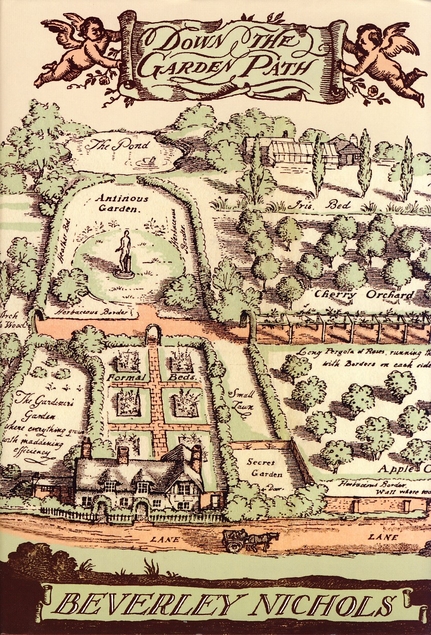
Beverley Nichol's classic Down the Garden Path  contains Nichol's autobiographical trials and tribulations, and a lot of funny stories, about her attempt to turn a lifeless lot into a beautiful garden.  For a beginner like myself, it provides a lot of tips and tricks as well as reassurance that I'm not a complete failure as a gardener.

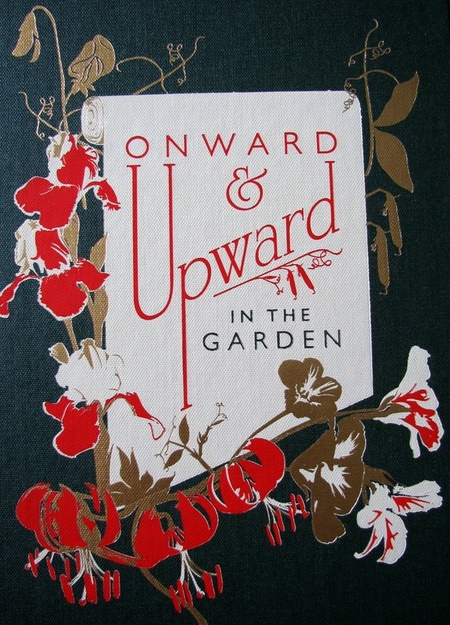
Onward and Upward in the Garden is another great resource for gardeners.  In 1925, Katharine White published 14 articles for The New Yorker on gardening.  After her death in 1958, her husband E.B. White, assembled her work and had them published together as a book.  These articles are considered classics that every gardener should read at some point in their gardening careers.

Our libraries also carry one of my favorite gardening magazines, Sunset.  This magazine not only has articles about gardening in our local climate, but information about getaways, recipes, and other awesome things on the west coast.  It's a magazine I read every month because it has so much interesting semi-local information.  Magazines can also be checked out for three weeks at a time, just like books! So next time you're in, flip through a copy and see what you think.

Wednesday, February 12, 2014

Learning | Doldrums

If we are to believe the prognostication of a certain groundhog in Pennsylvania, winter will be here for another six weeks or so. Many people are sick and tired of winter, especially back East, where polar vortexes seem to send storm after storm. My best friend, Roberta, who lives in New Jersey, recently proclaimed, "Enough, already!"

Doldrums of Spring, from jonasflanken's photostream
on Flickr.com. Some rights reserved.
We have finally started to get rain here in the Central Valley. We know we need the rain. Most people I talk to are really glad to see it. But if it continues, I wonder how long it will be until I hear library customers wishing for spring and sunshine.

There's a word for the melancholy feeling we get, when the weather has been gloomy for too long: doldrums.  Doldrums first appeared in written form in the late 18th century.  Its origins are murky; it seems to have come from the past participle of the Old English verb, dullen, which is dulled. Doldrum originally referred to a person who was dull, what is sometimes called a dullard. Scholars have speculated that doldrum was formed on the pattern of the word tantrum. (Now that's another interesting word! Nobody really knows its origin, either.) We use the word in its plural form, usually in the phrase, in the doldrums.

If you have young family members in the doldrums, you should consider reading Zoozical together.  This picture book by Judy Sierra, with illustrations by Marc Brown, should help cheer you both up. I think my favorite part of the book is the description of all of the despondent animals in the zoo in the middle of winter: "Little lemurs stopped leaping./Their yowling was keeping the wombats awake. Then the snakes (by mistake) tied themselves up in knots. Ocelots lost their spots." They're bored. Nobody wants to come see them, when it's cold and icy outside.  So, they come up with a plan: they'll put on a Zoozical! Okay, maybe the songs in the Zoozical are my favorite part. I can't make up my mind. But who can resist songs like "The Seals on the Bus," "For He's a Jolly Gorilla," or "My Darling Porcupine?"

Another meaning of doldrums is better explained by an encyclopedia entry in one of SSJCPL's databases, EBSCOhost. Doldrums is another word for an equatorial belt of calms, located slightly north of the equator between two belts of trade winds.  Some people have suggested that the phrase "in the doldrums"  comes from comparing one's mood to that of depressed sailors who are stuck in a vessel on calm waters.

Sunrise in the Doldrums, from Angela Huxham's
photostream on Flickr.com. Some rights reserved.

What do you like to read, to beat the doldrums?  Many of us turn to cozy mysteries, like Nancy Atherton's Aunt Dimity series, or at least something light-hearted, like Ladies' Night by Mary Kay Andrews. Leave your suggestions below. Your fellow readers will thank you.

Monday, February 10, 2014

Just Life | Library Computers

Did you know that the library has free internet computers? You just need a library card to use these computers for free.

Here is a quick summary about our library computers:

  • You need a library card to access the library computers.
  • You can use a computer for at least an hour per day.
  • To print (black and white) is only 10 cents.
  • To print (color) is only 50 cents.
  • You can reserve a library computer seven days in advance, but you need to use the reservation computers from inside the library.
  • Your print job gets printed right in front of you to safeguard your privacy.
  • Bring some change for your print job. Our printer doesn't accept credit cards or debit cards.
  • Your print job stays in the print queue for at least 2 hours so you don't have to rush to the printer to get your print job.
So, if your home computer crashes unexpectedly, don't worry.  Just come to your local library to use a computer for free.

Signing off until next Monday- Panteha